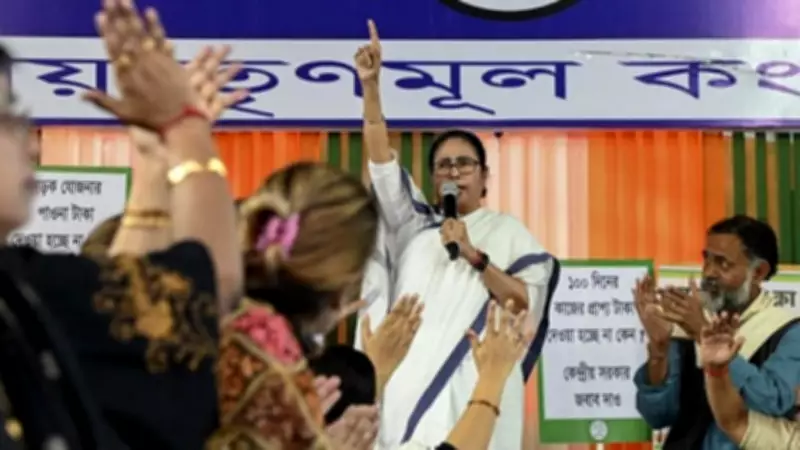
Lakshmir Bhandar Emerges as Mamata Banerjee's Key Electoral Gambit in West Bengal's Budget
In a significant political development, the Lakshmir Bhandar scheme has become the focal point of West Bengal's election-year budget, positioning itself as Chief Minister Mamata Banerjee's most crucial electoral strategy. The budget, unveiled amid intense political campaigning, underscores the Trinamool Congress government's reliance on cash-transfer initiatives to secure voter support in the upcoming assembly elections.
BJP's Counter-Promise Highlights Scheme's Centrality
Leader of Opposition Suvendu Adhikari of the Bharatiya Janata Party has made a striking announcement, declaring that if the BJP is voted to power in West Bengal, it would substantially hike the allowance under the Lakshmir Bhandar scheme to Rs 3,000. This move effectively acknowledges the scheme's pivotal role in Bengal's electoral landscape and signals a competitive approach to welfare politics.
Adhikari's statement represents a strategic concession to the importance of cash-transfer politics in the state, suggesting that both major political parties recognize the scheme's influence on voter sentiment. The promise to enhance the allowance reflects the BJP's attempt to counter the Trinamool Congress's welfare narrative while engaging directly with the electorate's economic concerns.

Budgetary Focus on Welfare Schemes
The West Bengal government's budget for the election year places significant emphasis on social welfare programs, with Lakshmir Bhandar receiving prominent attention. This scheme, which provides financial assistance to women from economically disadvantaged backgrounds, has been positioned as a cornerstone of the administration's pro-poor agenda.
Political analysts observe that the budget's design aims to consolidate support among key voter segments, particularly women and low-income households. The allocation of resources to Lakshmir Bhandar and similar initiatives highlights the government's strategy to leverage direct benefit transfers as a tool for electoral mobilization.
Implications for West Bengal's Political Dynamics
The emergence of Lakshmir Bhandar as a central electoral issue underscores the evolving nature of political contestation in West Bengal. Cash-transfer politics has gained substantial traction, with both the ruling party and the opposition crafting their campaigns around welfare promises.
This development signals a shift towards issue-based politics centered on economic empowerment and social security. The competitive promises regarding the scheme's enhancement reflect the high stakes involved in the upcoming elections and the parties' efforts to appeal to the electorate's aspirations for improved living standards.
As the political battle intensifies, Lakshmir Bhandar is likely to remain a key talking point, shaping public discourse and influencing voter decisions in the lead-up to the polls.