Kolkata Voters Face Lengthy Queues as Mamata Banerjee Battles Alleged Harassment in Supreme Court
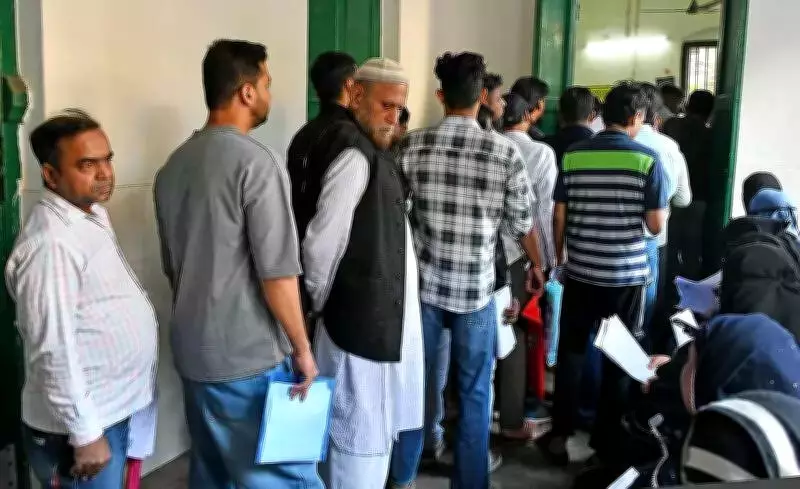
In a significant development unfolding simultaneously on legal and administrative fronts, Kolkata witnessed contrasting scenes on Wednesday. While Chief Minister Mamata Banerjee attended a crucial Supreme Court hearing concerning alleged Systematic Voters' Education and Electoral Participation (SVEEP) and related harassment issues in West Bengal, hundreds of citizens across the city queued up at various designated hearing centers. Their objective was singular: to prove their validity as genuine voters amidst growing confusion and bureaucratic challenges.
Hearing Centers See Long Lines and Confused Citizens
At Mutty Lal Seal's Free College, approximately 300 individuals were summoned for hearings. The atmosphere was one of weary determination, with most voters expressing support for the Chief Minister's decision to legally challenge what they perceive as harassment. The hearings, primarily addressing logical discrepancies in voter data, have created an environment of uncertainty for many.
Priti Sarogi, a voter originally from Jorasanko who recently relocated to New Alipore, shared her frustrating experience. "I completed the mapping process with my grandmother since my parents are deceased. The age gap between us appeared below 40 years because she married at 12 or 13. Today, I arrived with all necessary documents, but officials continuously confuse me, demanding copies one after another," she explained. While acknowledging the CM's Supreme Court move as a positive gesture, Sarogi remained skeptical about whether the harassment would cease.

Allegations of Political Motives and Identity Challenges
The situation took a more serious turn for some residents. Asif Ali, a Jorasanko local, presented a document revealing that an individual named Alok Santara had filed Form 7 against him, falsely claiming he wasn't an Indian citizen. "A stranger alleges I'm an outsider despite my valid Aadhaar, voter ID, PAN card, and passport. I received an urgent call from the Booth Level Officer demanding my presence within an hour. When I contacted this person, he denied everything," Ali stated. He speculated this might be a plot orchestrated by BJP leaders to harass him and his family, noting similar claims were made against nine others. "Can anyone be scammed merely by filling a form? The BJP won't succeed because Mamata Banerjee is here, fighting for legitimate voters," he asserted.
Other cases highlighted procedural inefficiencies. Murrium was summoned due to a name mismatch with her father, while her husband, Usuf, criticized the rushed timeline. "I don't wish to judge the process, but conducting it over two months instead of four created unnecessary pressure. Not only voters but even those implementing Election Commission orders face harassment from excessive workloads. The intent was good, but errors in execution exist, which the CM rightly highlighted—this strengthens democracy," he remarked.
Bizarre Reasons and Community Support for Mamata's Stand
Some hearings involved unusual justifications. Anjum Sabbir was called to appear with his two daughters as proof of their existence. Leaving the center, he smiled wryly, questioning, "What do I do if summoned for such a reason?"
Despite the chaos, many praised the Chief Minister's intervention. Shahbaz Ajmal, another Jorasanko resident, noted, "This is an excellent move by Mamata Banerjee, as she fights for every Bengali citizen regardless of caste, creed, or religion. I was summoned because my father has six children—what are we supposed to do about that? She is the only CM raising her voice against this harassment, making us proud."
The dual narratives—legal battles in Delhi and ground-level struggles in Kolkata—underscore the complexities of voter verification processes in West Bengal. As hearings continue, citizens await clarity, hoping the Supreme Court's involvement will streamline procedures and reduce alleged harassment, ensuring fair electoral practices ahead.