Kolkata Halts Daily Routines as Mamata Banerjee Takes SIR Battle to Supreme Court
On Wednesday, Kolkata experienced an unusual pause in its bustling rhythm—not for a political rally or festival, but for a courtroom proceeding that resonated deeply with its citizens. As West Bengal Chief Minister Mamata Banerjee presented her arguments on the Special Intensive Revision (SIR) before the Supreme Court, thousands across the city tuned into live telecasts, finding their everyday administrative struggles articulated in the country's highest judicial forum.
Personal Connections Forged Through Shared Ordeals
For many Kolkatans, the hearing was not just a legal event but a personal validation. Sayantan Chakraborty from Tangra, who spent over four hours in an SIR queue on Monday due to a spelling error in his father's name, felt an "instant connection" upon learning about the CM's court appearance. "My wife also stood in line recently, but her issue remains unresolved after being asked for additional documents by the BLO and AERO," he shared. Taking a break from work, Chakraborty watched the live-streaming at a Ward 57 camp, where party workers had set up screens. "Hearing Didi talk about people like us gave me assurance that someone understands our plight," he expressed emotionally.
City-Wide Engagement: From Para Clubs to Protest Sites
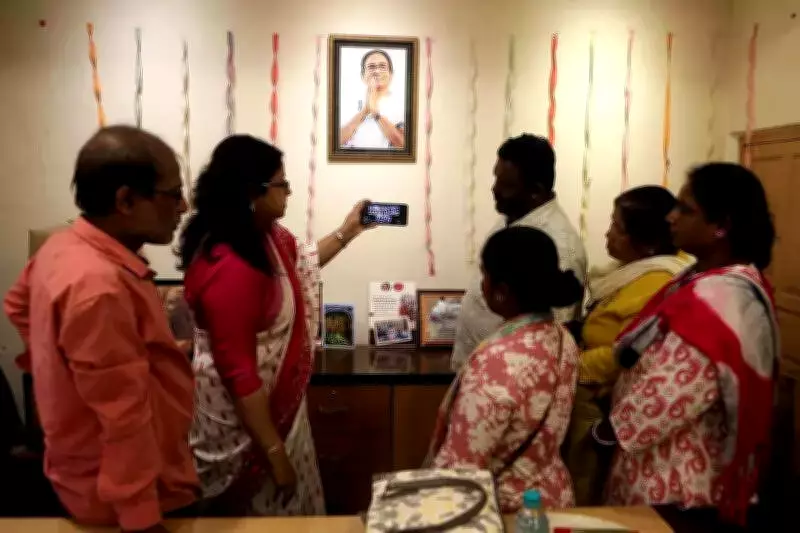
The enthusiasm was palpable from as early as 11 AM, with multiple neighborhood clubs reporting groups gathering around television sets to follow the proceedings. At several Trinamool Congress party offices, workers arranged chairs and loudspeakers, transforming the court hearing into a collective viewing event. In Kidderpore, Booth Level Officer (BLO) Dayaram Jaiswara paused his hearings to catch the action at a local club, praising Banerjee's preparation. "The way she projected our issues shows she did her homework well," he noted.

At Dalhousie, protesting BLOs kept an eye on their mobile phones throughout the afternoon. Tanushree Modak, a prominent figure in the protests, revealed plans for larger screenings if Banerjee returns to Delhi for subsequent hearings. "We had expectations, and our head of state lived up to every bit of them," she stated.
Academic and Legal Perspectives on the Submission
Shreya Roy, a political science professor, highlighted the empathetic language used by the Chief Minister. "She spoke in a way we understand, showing genuine empathy. Whether one agrees with her politics is secondary; what mattered was her effort to summarize our ordeals before the highest court," Roy explained.
Gaurav Poddar, a law student from South Canal Road, admired the legal craftsmanship of Banerjee's arguments. "Her submission was a masterclass in making an argument concise yet extremely effective. She managed to cover every stratum of society affected by the SIR," he observed.
Grassroots Reactions and Informal Viewing Points
In neighborhoods like Kasaripara in Bhowanipore and Satpukur in Sinthee, tea stalls and small shops became informal viewing hubs. Customers paused to watch segments on smartphones when television coverage faltered. In homes, families gathered around single devices to follow live blogs and televised panels, replaying Banerjee's remarks and debating legal nuances.
At Shakti Sangha in Behala, club members noted a shift in public discourse after the hearing. "We've been discussing the SIR case for weeks, but the CM's submission changed several equations. People in queues are now actively sharing updates," an organizer remarked, referencing the mobilization slogan used by supporters.
The day underscored how a legal proceeding transcended courtrooms to become a city-wide moment of solidarity, with Kolkatans seeing their bureaucratic challenges reflected in a national spotlight.