A significant group of farmers in Maharashtra's Kolhapur district has voiced strong opposition to a proposed change in the alignment of the ambitious Nagpur-Goa greenfield expressway. The farmers, organized under the Kolhapur District Shaktipeeth Expressway Samarthan Samiti, argue that the realignment announced by Chief Minister Devendra Fadnavis, which would bypass Kolhapur and Sangli districts, is not feasible and goes against the project's core purpose.
Farmers Rally in Support, Submit Land Documents
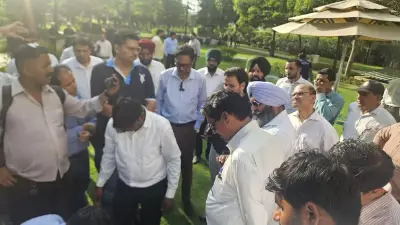
During a press conference held in Kolhapur on Saturday, members of the farmers' forum revealed that support for the original highway plan is growing, not waning. In a powerful demonstration of their commitment, numerous farmers have submitted their land documents to the forum. This act signifies their formal willingness to allow the government to acquire their land for the project.
Daulatrao Jadhav, the president of the forum, stated that the number of supporting farmers in Kolhapur district alone has now reached 300. He emphasized that these landowners recognize the long-term importance and economic benefits the expressway would bring to the region.

Core Objections to the New Alignment
The forum's primary contention lies with the strategic and religious rationale of the highway. Jadhav explained that a key objective of the expressway is to connect important religious centers, a goal that would be undermined if the route is altered to skirt Kolhapur and Sangli. The members labeled the newly announced alignment as "not feasible" from both a connectivity and developmental perspective.
Furthermore, the forum addressed the issue of localized resistance. They claimed that many farmers in areas like Kagal in Kolhapur are actually in favor of the project but have been reluctant to publicly express support due to prevailing political pressures.
A Proposed Solution: Enhanced Compensation
In a direct appeal to the state government, the forum proposed a clear solution to mitigate remaining opposition. Jadhav asserted that if the government announces a compensation package set at five times the market value of the land, farmer resistance would cease completely. This demand highlights the central role of fair and attractive compensation in smoothing the path for large-scale infrastructure projects that require significant land acquisition.
The farmers' stance presents a complex challenge for the state administration. It underscores a divide between the government's current plan to change the route and a substantial section of the very community the change intends to spare. The situation continues to develop as stakeholders seek a resolution that balances infrastructure goals with the interests of local landowners.