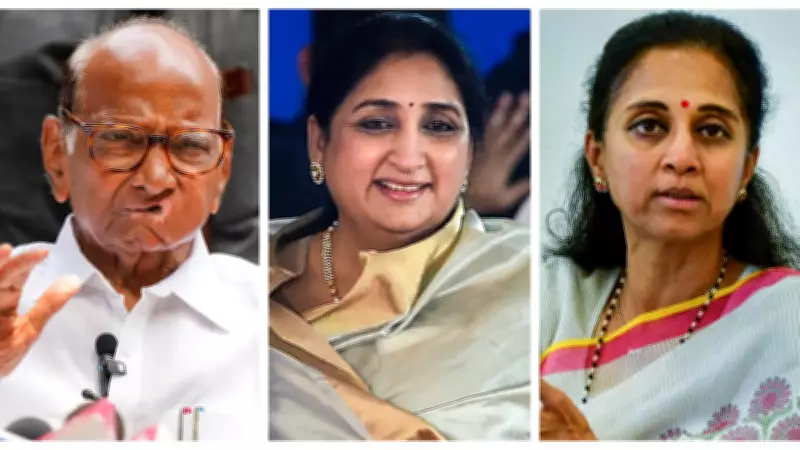
The political landscape of Maharashtra has entered a period of significant transition following the unfortunate demise of senior leader Ajit Pawar. As the Nationalist Congress Party (NCP) grapples with this profound loss, attention has turned to the complex process of merging various factions within the party. This development carries substantial implications for the state's political future and requires careful navigation by key stakeholders.
The Paramount Influence of Sharad Pawar
In the wake of these developments, political observers and insiders unanimously identify Sharad Pawar as the most influential figure who will shape the course of merger discussions. As the patriarch of the Pawar family and the founder of the NCP, his decades of political experience and extensive network position him uniquely to guide these sensitive negotiations. His decisions will likely determine the framework and timing of any potential unification between different NCP factions.
Other Significant Voices in the Process
While Sharad Pawar's role remains paramount, several other individuals are expected to play crucial parts in the merger deliberations:

- Supriya Sule: As Sharad Pawar's daughter and a prominent NCP parliamentarian, her perspective carries considerable weight in family discussions and party matters.
- Praful Patel: A senior NCP leader with substantial organizational experience, his insights into party dynamics and administrative matters will be valuable during negotiations.
- Jayant Patil: The Maharashtra NCP president brings state-level organizational knowledge that will be essential for implementing any merger decisions.
- Chhagan Bhujbal: As a veteran OBC leader within the party, his support could be crucial for maintaining broader coalition dynamics.
The Complex Dynamics of Faction Integration
The process of merging NCP factions involves navigating intricate political relationships, ideological alignments, and organizational structures. Each faction brings distinct support bases, regional strengths, and political priorities that must be carefully balanced. The absence of Ajit Pawar, who commanded significant loyalty within certain party segments, adds another layer of complexity to these discussions.
Political analysts suggest that successful merger talks will require addressing several critical areas:
- Organizational structure integration: How different faction hierarchies will be combined into a unified party framework.
- Power-sharing arrangements: Distribution of key positions and responsibilities among leaders from various factions.
- Ideological consensus: Alignment on core political principles and policy directions for the unified party.
- Electoral strategy coordination: Developing a cohesive approach for upcoming elections at various levels.
The Broader Political Context
These internal NCP developments occur against the backdrop of Maharashtra's evolving political landscape, where coalition dynamics and electoral calculations constantly shift. The outcome of faction merger talks could significantly influence the state's power equations and opposition strategies. As the process unfolds, all eyes remain on how the Pawar family and senior party leaders navigate this challenging period of transition and consolidation.