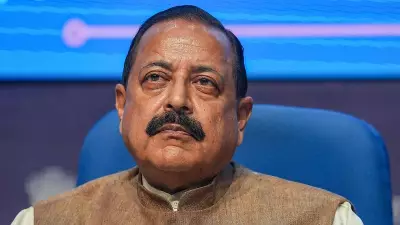
In a robust defence of his government's performance ahead of crucial local body elections, Kerala Chief Minister Pinarayi Vijayan asserted that the state has undergone a transformative decade, emerging as a national leader in key human development metrics.
A Decade of Transformation: Poverty, Health, and Human Development
Addressing the public, the Chief Minister presented a compelling data-driven case. He stated that Kerala now has the lowest poverty rate in India, at just 0.55%, according to the Niti Aayog's 2023 National Multidimensional Poverty Index. This marks a significant decline from 0.71% in 2021.
Vijayan attributed this remarkable achievement to a legacy of progressive policies, including historic land reforms, universal access to education and healthcare, decentralised governance, robust social security nets, and a strong focus on women's empowerment.

The state's health indicators are equally impressive. The infant mortality rate has plummeted to five per 1,000 live births, a figure that not only beats the national average of 25 but also surpasses the United States' rate of 5.6. Furthermore, he highlighted that around 80.7% of people in Kerala receive medical treatment before death, nearly double the national average of 48.7%.
Leadership in National Indices and Empowering Local Governance
Kerala continues to lead the nation in broader well-being assessments. The Chief Minister cited a human development index of 0.758, which is above the global average of 0.754, and a physical quality of life index of 95.34. Cities like Thiruvananthapuram, Kochi, and Kozhikode now rank ahead of Delhi and Mumbai in life-quality assessments.
A key pillar of this transformation, according to Vijayan, is genuine decentralisation. He revealed that local bodies have been empowered with approximately Rs 1,23,175 crore over the last ten years, transforming them into 'true local governments'. This funding has fueled tangible improvements, including GIS-based road mapping via the R-Track system and substantial rural infrastructure upgrades.
Over the last five years alone, Rs 8,867 crore was spent on roads and Rs 1,186 crore on anganwadi buildings. The K-Smart digital governance platform has streamlined services, processed over 84 lakh files online, and reduced corruption risks, while generating Rs 2,615 crore as own revenue for local institutions.
Navigating Challenges and the Road Ahead
Despite the positive indicators, the Chief Minister accused the Central Government of creating financial hurdles by restricting borrowing and drastically reducing grants, leading to an estimated shortfall of around Rs 57,000 crore for the state.
He argued that even under these constraints, Kerala's economy showed resilience, recording a GSDP growth of 6.5% in 2023–24, up from 4.2% the previous fiscal year, with increases in both tax and non-tax revenues.
Framing the upcoming local body polls as a choice between 'development and development-resistance', Vijayan outlined the state's future roadmap. This includes a continued focus on social protection schemes, furthering women's empowerment—evidenced by a rise in women's labour participation to 36.4% in 2023–24—alongside sustained urban development and digital reforms.