In a significant development that is set to alter Kerala's political dynamics, the state unit of the Janata Dal (Secular) has officially decided to sever its ties with the party's national leadership. The Kerala JDS announced its plan to merge with a new political party, marking a decisive break from its parent organization.
A Decisive Split from National Leadership
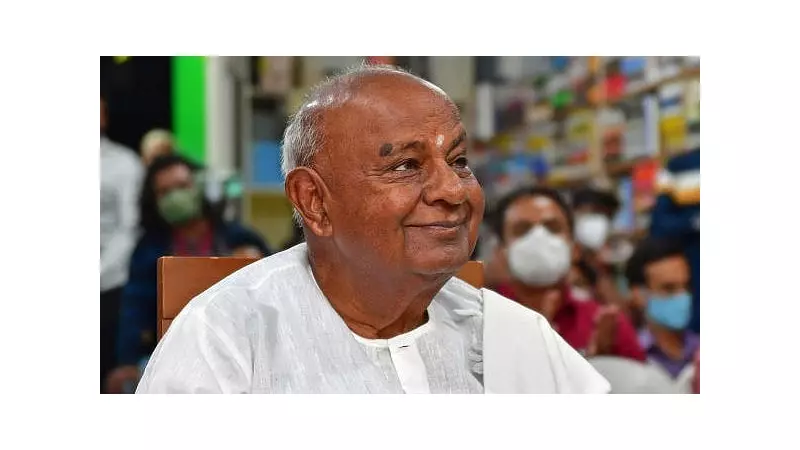
The pivotal decision was made during a meeting of the Kerala JDS state committee held in Thiruvananthapuram on Sunday. The committee unanimously passed a resolution to cut all organizational connections with the national Janata Dal (Secular), led by former Prime Minister H.D. Deve Gowda and former Karnataka Chief Minister H.D. Kumaraswamy.
The resolution clearly stated that the Kerala unit would no longer function under the directives or control of the national party. This move formalizes a growing rift that has been evident for some time, as the Kerala wing sought greater autonomy and a political path more aligned with the specific realities of the state.
Merger with a New Political Entity
Concurrently, the state committee has given its in-principle approval for a merger with a new political party that is yet to be formally launched. This new entity is widely reported to be under the leadership of Mathew T. Thomas, the current state president of Kerala JDS and a former MLA.
Mathew T. Thomas confirmed the decisions, indicating that the formal launch of the new party and the completion of the merger process are on the horizon. The final structure, name, and symbol of the new party will be decided and announced soon, following broader consultations.
This strategic shift is seen as an effort to carve out a distinct and stronger identity in Kerala's competitive political arena, dominated by the CPI(M)-led LDF and the Congress-led UDF.
Background and Political Implications
The Janata Dal (Secular) has historically had its primary base in Karnataka, with a limited presence in Kerala. The Kerala unit, feeling sidelined and constrained by the national leadership's focus on Karnataka, has been advocating for a more independent course of action.
The decision to break away and form a new, Kerala-centric party is a direct result of these long-standing frustrations. It reflects a desire to craft policies and alliances that directly address local issues without being bound by the strategies of the national party, which are often tailored for a different electoral battlefield.
This realignment could potentially open up new avenues for political alliances in the state. The new party, under Mathew T. Thomas, may position itself as a potential partner for existing fronts or seek to mobilize voters in specific regions. The move undoubtedly adds a fresh variable to Kerala's complex political equations ahead of future elections.
In summary, the Kerala JDS has taken a bold step towards political independence by cutting its national ties and opting for a merger with a soon-to-be-launched party. This restructuring promises to introduce a new player into Kerala's political scene, with outcomes that will be closely watched by analysts and competitors alike.