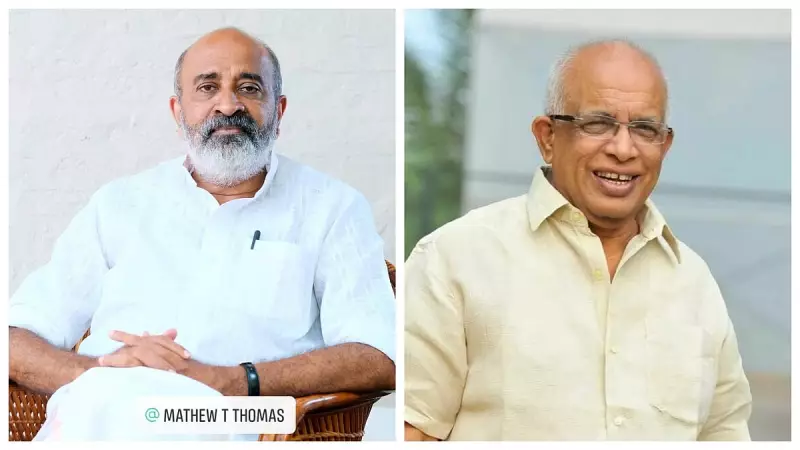
In a significant political development in Kerala, the two remaining legislators of the Janata Dal (Secular) [JDS] in the state assembly have formally announced their intention to merge with the Indian Social Justice Party (ISJD). The MLAs submitted a formal communication detailing their merger plans to the Legislative Assembly Speaker, MB Rajesh, on Wednesday.
Formal Notification to the Speaker
The move was initiated by the party's state president and sitting MLA, Mathew T Thomas. He was accompanied by the other JDS legislator, C. K. Nanu, when they met the Speaker at his official chamber in the assembly complex. The legislators presented a detailed letter outlining their decision to join forces with the ISJD, led by veteran politician P. C. George.
The official notification is a crucial procedural step required under the anti-defection law. For a merger of legislative parties to be legally recognized and to avoid disqualification under the Tenth Schedule of the Constitution, at least two-thirds of the members of the legislature party must agree to the amalgamation. With only two MLAs in the JDS's Kerala unit, both have consented, thus fulfilling this critical legal requirement.
Background and Political Calculations
The Kerala JDS has been grappling with internal strife and a diminishing political footprint for some time. Its alliance with the Left Democratic Front (LDF) in the state had also become strained. The decision to merge with the ISJD is seen as an attempt to find a more stable political platform and consolidate a niche voter base.
The Indian Social Justice Party, though a relatively new entrant, is led by P. C. George, a former legislator known for his sharp political rhetoric and a certain following in specific constituencies. The merger aims to pool the resources and voter bases of both entities to create a stronger, more influential political force in Kerala's fragmented political landscape.
This development occurs amidst ongoing political realignments in the state, where smaller parties often play a decisive role in tight electoral battles. The absorption of the JDS's legislative strength into the ISJD could potentially alter equations, especially in the constituencies represented by Thomas and Nanu.
Next Steps and Implications
Following the formal intimation to the Speaker, the next step lies with the office of the Speaker and possibly the Election Commission of India. The Speaker will examine the submission for compliance with parliamentary rules and the anti-defection law before making any official recognition of the merger within the assembly.
If recognized, the two MLAs will cease to be members of the JDS legislature party and will be recorded as part of the ISJD legislature group. This will have immediate implications for their seating arrangement, committee memberships, and other legislative privileges tied to party affiliation.
For the broader political scene, this merger signifies the continuing churn within smaller regional and caste-based parties in Kerala. It highlights the challenges these parties face in maintaining relevance and the strategic moves they undertake for survival. The success of this merger will ultimately be tested in future elections, where the combined entity will need to demonstrate its electoral viability.
Political analysts will be watching closely to see if this consolidation yields benefits for both the leaders involved and whether it can attract support beyond their current strongholds. The move also puts the spotlight on Speaker MB Rajesh, as his office handles the procedural and legal aspects of this politically sensitive merger.