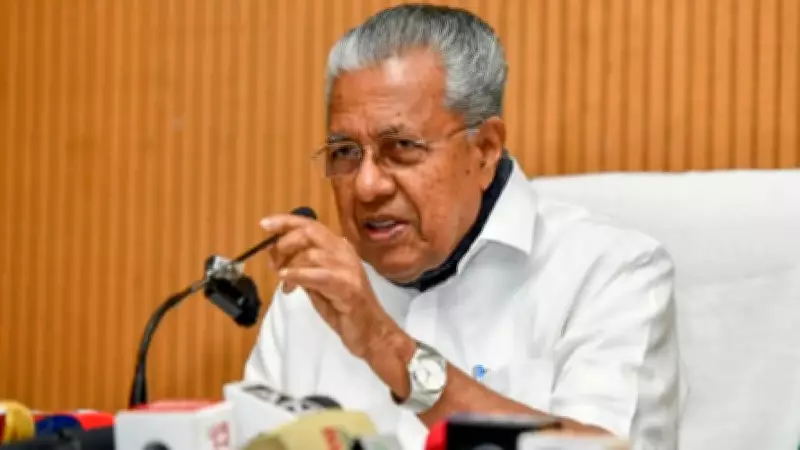
The 2026 assembly election in Kerala has emerged as a critical stress test for Chief Minister Pinarayi Vijayan and the durability of what was once a highly centralised leadership model often described as 'Brand Pinarayi'. The electoral signals suggest that this model—built on administrative authority, political control, and a presidential-style campaign approach—is now facing visible strain under governance fatigue and shifting voter expectations.
Strain on the Leadership Model
Despite an extensive, leader-centric outreach strategy—spanning mass advertising, media engagement, and digital mobilisation—the Communist Party of India (Marxist) has struggled to convert visibility into voter endorsement. This indicates that personality-driven campaigns may be losing effectiveness in a state known for politically aware, issue-based voting.
Symbolic Shift in Dharmadam
The most symbolic indication of this shift has come from Dharmadam, Vijayan's home constituency. A reduced margin—or vulnerability—compared to 2021 signals more than a localised contest. Being seriously challenged by a relatively young Congress candidate points to erosion of entrenched political capital and a generational shift in voter alignment. This is reinforced by trends in Pinarayi panchayat, his home turf, where trailing at key stages reflects unease within what was once a secure base.

From Anti-Incumbency to Anti-Leadership
Importantly, the contest appears to be shifting from anti-incumbency against the CPM to a more personalised 'anti-leadership' sentiment directed at Vijayan. When dissatisfaction crystallises around a single leader, it can accelerate electoral decline. Rebel-backed victories in constituencies like Payyannur and Thaliparamba—long considered CPM bastions—signal cracks within the party's organisational coherence.
Internal Dissent and Organisational Cracks
These outcomes are not merely electoral setbacks but indicators of internal dissent and reduced command over cadre discipline. In tightly structured parties like the CPM, such breaches often reflect deeper tensions over leadership style, candidate selection, and decision-making centralisation. At the macro level, the CPM's broader performance reinforces systemic weakening, with inability to secure leads across many seats and pronounced decline in the Malabar region.
Council of Ministers Hit
Another dimension is the performance of the council of ministers, with 13 losing, indicating broad-based electoral stress. Taken together, these developments suggest that the 2026 election could mark a decisive inflection point. The challenges confronting Pinarayi Vijayan are no longer limited to opposition pressure but extend to internal cohesion, leadership perception, and voter trust.
Conclusion: A Deeper Political Churn
What is unfolding is not merely a cyclical electoral setback but a deeper political churn that questions the sustainability of a leadership-centric model in Kerala's complex and politically engaged landscape. The 2026 election results serve as a wake-up call for the CPM, highlighting the need for introspection and adaptation to changing voter dynamics.