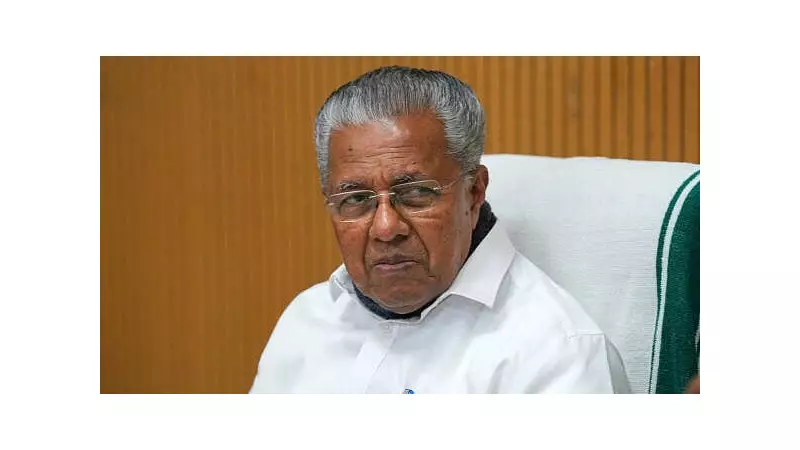
Kerala Chief Minister Pinarayi Vijayan has raised a significant alarm with Prime Minister Narendra Modi, expressing grave concerns over the proposed VB-G RAM G Bill. In a formal letter dated 19 December 2025, Vijayan cautioned that the legislation carries substantial risks to the nation's financial architecture and the foundational principle of decentralisation of power.
Core Concerns Over Central Legislation
The Chief Minister's communication outlines a firm stance against what the state government perceives as an overreach by the central government. Vijayan argued that the bill, in its current form, could severely undermine the financial autonomy of states, a cornerstone of India's federal structure. He emphasised that such moves contradict the spirit of cooperative federalism and could set a dangerous precedent for centralised control over matters best managed at the state level.
Vijayan specifically linked his arguments to the context of rural welfare. He reminded the Prime Minister that flagship schemes like the Mahatma Gandhi National Rural Employment Guarantee Act (MGNREGA) were conceived during a period of severe crisis in India's rural economy. The implication was clear: centralising control or altering the funding mechanisms for such vital social safety nets could have devastating consequences for the rural poor, especially during economic downturns.

Defending MGNREGA and State Autonomy
The Kerala CM's letter serves a dual purpose: it is both a critique of the new bill and a robust defence of existing decentralised frameworks. By invoking MGNREGA, Vijayan highlighted a successful model where central funding is implemented with significant operational discretion at the state and local levels. This, he suggested, ensures that schemes are responsive to local needs and conditions.
The warning extends beyond immediate finances. The Chief Minister pointed to long-term risks where the erosion of decentralisation could stifle regional development initiatives and innovative governance models, for which states like Kerala have often been recognised. The move is seen as part of an ongoing political and ideological tussle between the CPI(M)-led state government and the BJP-led central government over the distribution of powers and resources.
Potential Implications and Political Standoff
This formal objection sets the stage for a potential confrontation in Parliament and among various state governments. The concerns raised by Kerala are likely to resonate with other opposition-ruled states that are similarly protective of their fiscal and administrative space. The outcome of this dispute could influence how future central schemes are designed and implemented across the country.
Analysts view this as a significant moment in India's federal discourse. The letter from Chief Minister Pinarayi Vijayan to Prime Minister Narendra Modi is not merely administrative correspondence but a political statement defending state rights. It underscores the ongoing tension between unifying national policies and the diverse, localized needs of India's states, a balance that is crucial for the nation's democratic and economic health.