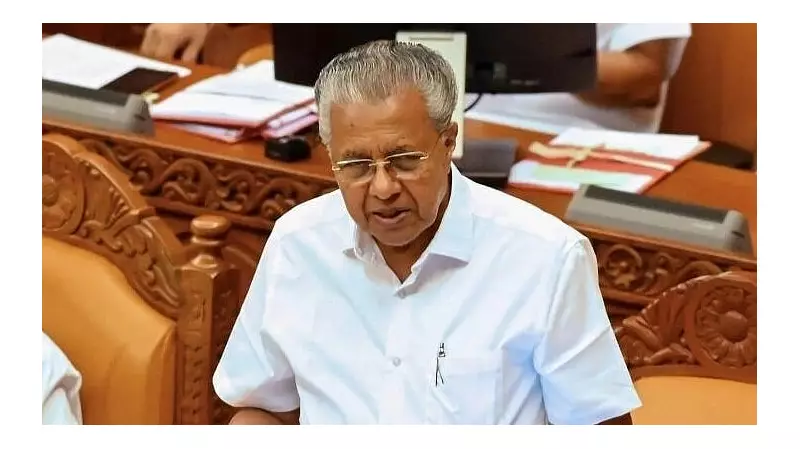
In a significant political statement, Kerala Chief Minister Pinarayi Vijayan has drawn a direct comparison between the ideology of the Jamaat-e-Islami and that of Hindutva groups. The CM asserted that both factions propagate a form of nationalism deeply rooted in religious identity and seek to establish governance controlled by a single religion.
Ideological Parallels and Historical Comparisons
Speaking on Friday, December 5, 2025, the veteran Communist leader did not mince words. He likened the ideological approach of both Hindutva forces and political Islamists to that of infamous 20th-century dictators. Vijayan specifically named Benito Mussolini and Adolf Hitler as reference points for their methods of propagating extreme nationalism.
The Chief Minister's core argument centered on the concept of religion-based nationalism. He posited that whether it is the political Islam advocated by groups like Jamaat-e-Islami or the majoritarian nationalism of Hindutva organizations, the end goal is similar: a state where political power is exercised through the prism of a single religion, marginalizing other communities and secular principles.
Context of the Remarks
While the CM's comments did not target the Indian government directly, they represent a sharp critique of two major religio-political ideologies active in the Indian landscape. His remarks are seen as a reaffirmation of the Left's staunch secular stance, positioning it against what it perceives as dual threats from majoritarian and minority communalism.
The comparison is particularly potent in Kerala, a state with a complex socio-political fabric where both Hindutva and Islamist political movements have a visible presence. By placing them on the same plane, Vijayan aimed to underscore a philosophical opposition to any form of identity-based politics that challenges constitutional secularism.
Potential Repercussions and Political Calculus
This bold analogy is likely to trigger strong reactions from both sides of the political spectrum. Supporters of Hindutva ideologies have consistently rejected comparisons to fascist regimes, while Islamist groups have often positioned their politics as a form of religious and social empowerment rather than majoritarian nationalism.
Analysts suggest the statement serves multiple purposes:
- Reinforcing Secular Credentials: It clearly demarcates the Left's position from both forms of religious politics.
- Political Messaging: It sends a message to the Left's traditional secular and minority vote base about its unwavering stance.
- Framing the Debate: It attempts to shift the political narrative in Kerala and nationally towards a critique of all forms of religious nationalism.
The timing of the statement, made on December 5, 2025, adds to its significance, coming amidst ongoing national debates on secularism, minority rights, and the nature of Indian nationalism. Whether this framing by the Kerala Chief Minister will gain wider traction or remain a point of contention remains to be seen.