Kerala Cabinet Approves Rs 404 Crore for Chellanam Seawall Phase II
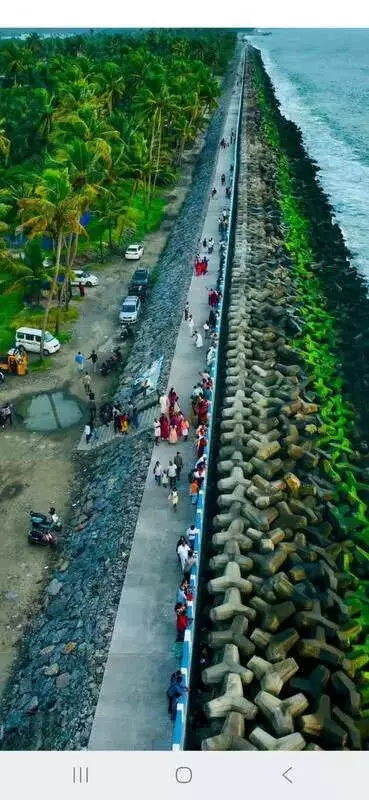
The Kerala state cabinet has granted administrative sanction of Rs 404 crore for Phase II of the Chellanam tetrapod seawall project, marking a significant development in coastal protection efforts. This decision comes as a major relief for the local community in Kochi, whose relentless protests have now crossed the 2,278-day mark, highlighting the urgency of addressing sea erosion in the region.
Project Details and Community Response
Phase II involves the construction of a 6.1-kilometer sea defense structure stretching from Puthenthode to Manassery. The Chellanam-Kochi Janakeeya Vedi, a local forum, has acknowledged this decision as a victory for their long-standing struggle. However, they have issued a warning that the current plan represents only a partial fix and could potentially leave neighbouring areas vulnerable to sea incursions.
V T Sebastian, the general convener of Janakeeya Vedi, stated, "We welcome the crucial step taken by the state government. However, by focusing only on the 6.1-kilometer stretch, we fear that sea incursions will be diverted northward toward Fort Kochi and other unprotected zones within the Kochi corporation."

Key Concerns and Demands
A significant point of contention in the project is the exclusion of groynes, locally known as pulimuttukal. The original designs for the Puthenthode-Kannamaly section included nine groynes, which are essential structures for breaking wave energy and reducing coastal erosion.
Sebastian emphasized, "A tetrapod wall alone cannot withstand the increasing intensity of the sea. Dredging activities by the Cochin Port have significantly deepened the seabed, making the coastline more susceptible to erosion." In response, Janakeeya Vedi is urging the government to adopt a more scientific and long-term approach to coastal management.
The forum has put forward several key demands to ensure comprehensive protection:
- Completing the tetrapod seawall before the onset of the next monsoon season.
- Reinstating the nine groynes that were part of the original design.
- Developing the Puthenthode fishing gap into a mini-harbour to support local livelihoods.
- Utilizing the silt dredged from the Cochin Port, which is currently wasted by being dumped in the deep sea, to naturally rebuild the shoreline.
Project Background and Implementation
Following the successful completion of Phase I, which covered the stretch from Chellanam to Puthenthode at a cost of Rs 347 crore, Phase II aims to fortify the remaining coastal stretches. This phase is critical for ensuring total protection of lives and property for thousands of families residing in the area.
The construction work for Phase II has been entrusted to the Uralungal Labour Contract Cooperative Society on a nomination basis. The project is funded through the Kerala Infrastructure Investment Fund Board (KIIFB) and is jointly implemented by the departments of water resources, finance, and the district administration.
K J Maxi, the local MLA, noted, "Uralungal completed Phase I in a responsible and timely manner. Phase II too will be implemented on a war footing to address the pressing needs of the coastal community."
This approval represents a pivotal moment in Kerala's efforts to combat coastal erosion, but it also underscores the ongoing challenges and the need for holistic solutions to protect vulnerable shorelines.