Karnataka presents a baffling economic contradiction that has ignited a fierce political debate. On one hand, the state boasts the highest per capita income among all major Indian states. On the other, it holds the dubious distinction of having the highest number of Below Poverty Line (BPL) ration cards in the country. This stark paradox lies at the heart of a heated exchange between the ruling Congress and the opposition BJP.
The Numbers Behind the Contradiction
The latest Economic Survey of Karnataka for 2023-24 reveals a per capita income of Rs 3,81,975. This figure places Karnataka at the top of the list of 22 major states, significantly ahead of others. However, data presented by the Union government in Parliament tells a different story. It shows Karnataka has a staggering 1.13 crore BPL ration cards under the National Food Security Act (NFSA). This is the highest for any state, with Uttar Pradesh, a much more populous state, coming in second with about 1.07 crore cards.
This discrepancy has become a political football. The BJP has seized on the BPL card data to criticize the Congress government, alleging it reflects failed governance and worsening poverty. State BJP President B.Y. Vijayendra accused the government of turning Karnataka into a "hub of poverty" and misleading people with guarantees. In response, the Congress has launched a counter-offensive, challenging the very basis of the data.
Congress Counters: Legacy Data and Central Neglect
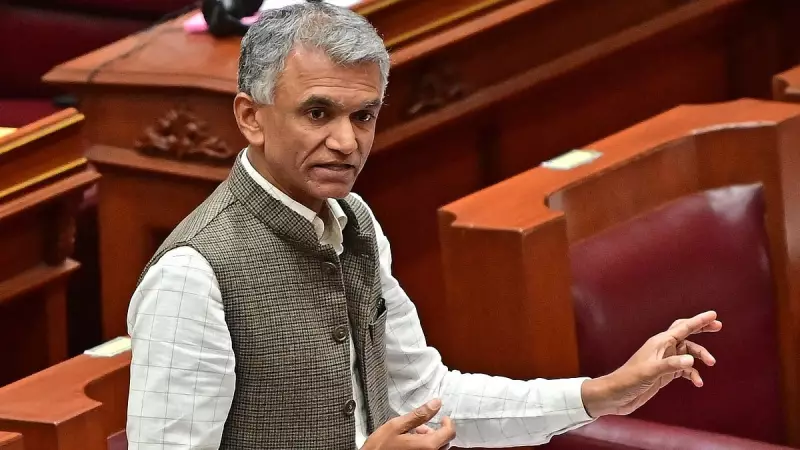
State Minister Priyank Kharge has vehemently defended the government's record. He argues that the BPL card data cited by the BJP is outdated and not a reflection of the current administration's performance. Kharge points out that the list was prepared based on the Socio-Economic Caste Census (SECC) of 2011. He places the blame squarely on the previous BJP-led governments, both at the Centre and in the state, for not updating this census for over a decade.
Furthermore, Kharge highlights a critical financial grievance. He states that the Union government owes Karnataka Rs 2,900 crore for food grains supplied under the NFSA. He also claims the Centre has not released Rs 1,200 crore for kerosene subsidies. This, according to the Congress, demonstrates central neglect rather than state failure.
Unpacking the Paradox: Explanations and Realities
How can a state with the highest average income also have the most citizens officially identified as poor? Experts and officials suggest several factors that help unravel this puzzle:
- Legacy Data: The primary explanation is the use of the 2011 SECC data. Karnataka's economic landscape, especially in tech hubs like Bengaluru, has transformed dramatically since then, but the official poverty identifier has not kept pace.
- Inclusive Approach: The state has historically been proactive in issuing ration cards. After the NFSA was enacted, Karnataka migrated a large number of existing cardholders to the new system to ensure no eligible family was left out.
- Economic Disparity: The high per capita income is heavily skewed by the immense wealth generated in Bengaluru and other industrial corridors. This average masks significant income inequality and persistent poverty in the northern districts and other rural areas.
- Population Dynamics: The number of ration cards is not a direct proxy for the current poverty rate. It represents households deemed eligible at a fixed point in the past, and family structures have changed over 13 years.
The state's Food and Civil Supplies Department officials confirm that while they have deleted some ineligible cards, the bulk of the list originates from the 2011 data. They emphasize that the high number is a result of an inclusive process, not necessarily a current poverty metric.
The Political Standoff and the Road Ahead
The debate has moved beyond data analysis into a full-blown political war. The BJP continues to use the figure to attack the Congress's "guarantee" schemes, questioning their effectiveness if poverty remains so high. The Congress, meanwhile, frames the issue as one of injustice from the Centre, combining the data issue with claims of withheld funds.
This controversy underscores a larger issue in Indian policy-making: the reliance on outdated data for critical welfare schemes. Until a new nationwide census or socio-economic survey is conducted, such paradoxes will remain easy fodder for political battles. For Karnataka, the challenge is twofold: to ensure its economic growth is more evenly distributed across regions and to push for updated data that reflects its current socio-economic reality, not the reality of over a decade ago.
The state's high per capita income is a testament to its economic engine. However, the sheer volume of BPL cards serves as a persistent reminder that the benefits of this growth have not yet reached all corners of the state, and that the official tools to measure deprivation are badly in need of an update.