Organisations representing Other Backward Classes (OBCs) in Karnataka have intensified their campaign for a reclassification of reservation categories within urban and rural local bodies. This renewed push comes against the backdrop of unresolved internal reservation for Scheduled Castes and mounting pressure on the state government to conduct long-pending civic elections.
The Core of the Dispute: Two Categories vs. Four
Currently, OBCs in the state enjoy a 32% reservation in education and employment, distributed across five categories: 1, 2(A), 2(B), 3(A), and 3(B). However, the 33% political quota reserved for OBCs in local bodies is confined to only two broad categories: A and B. This structure, critics argue, creates a significant anomaly, as it reportedly allows only 156 out of the total 802 OBC castes to gain political representation, leaving a vast majority of communities sidelined.
The previous BJP government constituted a commission headed by retired judge Justice K Bhaktavatsala in May 2022, following a Supreme Court directive to gather empirical data on OBC reservation in local bodies. In its October 2022 report, the commission recommended creating four distinct categories to ensure more equitable distribution:
- Category 1: 9.9% quota
- Category 2: 9.9% quota
- Category 3: 6.6% quota
- Category 4: 6.6% quota
The Congress government under Chief Minister Siddaramaiah, which assumed power in May 2023, accepted the Bhaktavatsala report in October 2023. However, it opted to restore the older two-category system initially implemented in 1996 based on recommendations from a panel led by Siddaramaiah himself when he was deputy chief minister.
Political Reactions and Planned Agitation
The government's decision has drawn sharp criticism from opposition leaders and community forums. BJP OBC functionary and Karkala MLA, V Sunil Kumar, accused the Congress of paying only lip service to social justice. "Congress tends to render only lip service on upholding principles of social justice. When it comes to implementation, it does only injustice," Kumar stated. He highlighted that OBCs, who form approximately 54% of the state's population, feel left in the lurch due to the current reservation policy for local bodies.
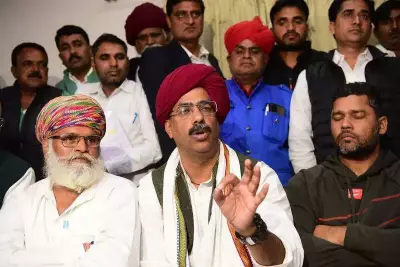
Community groups are now mobilising for a statewide outreach. Vadiraj, convener of the Forum for Social Harmony, asserted that the present categorisation deprives OBCs of social justice and demanded the implementation of the Bhaktavatsala report. "We are planning a campaign in a constructive manner. A massive outreach including a round table and symposium are being planned," he said.
Government Stance and Upcoming Legislative Battle
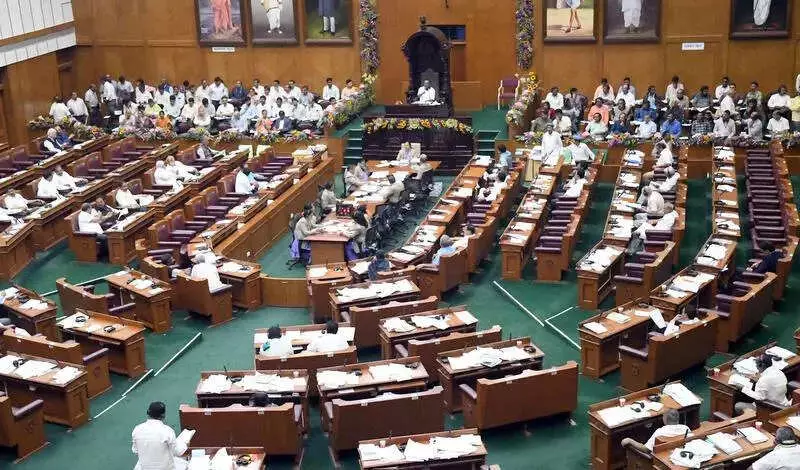
With the winter session of the state legislature beginning next week, OBC legislators across party lines are preparing to raise the issue forcefully. The timing is critical as the government faces pressure to hold elections for various local bodies, including the Greater Bengaluru Authority, zilla, and taluk panchayats, which have been delayed for a long time.
Congress MLC DT Srinivas expressed confidence that the chief minister would address the concerns. "Our government led by Siddaramaiah, is committed to social justice. We are confident the chief minister will rectify anomalies," Srinivas said, indicating support from OBC lawmakers within the ruling party.
Justice Bhaktavatsala, reflecting on the government's decision to revert to two categories, noted, "While the very purpose of constituting the commission was to rectify disparities and ensure equitable opportunity for all castes, the government preferred only two categories. It is their decision." The stage is now set for a significant political and social debate on equitable representation as Karnataka grapples with balancing complex reservation demands.