
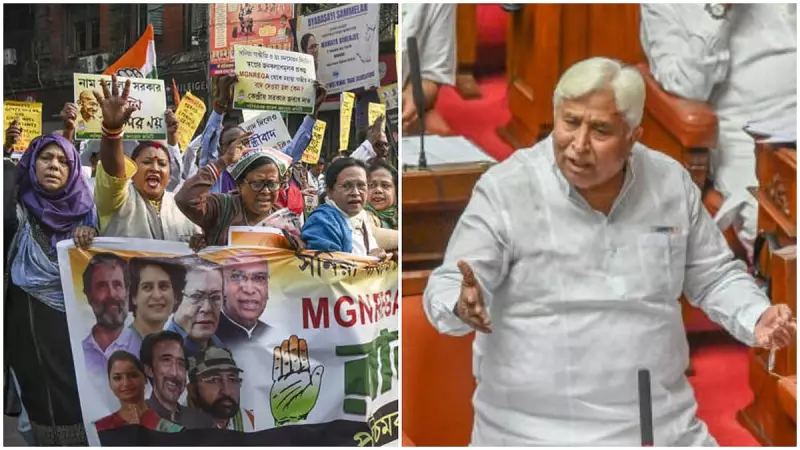
The Karnataka government has decided to escalate a significant legal battle to the nation's highest judicial authority. The state cabinet, led by Chief Minister Siddaramaiah, has given its formal approval to file a petition in the Supreme Court of India. This move challenges the constitutional validity of two specific central legislations: the Vanbandhu Kalyan Yojana (VBG) Act and the Ram G Act.
The Core of the Constitutional Challenge
This decision, made during a cabinet meeting on Tuesday, stems from a firm belief within the state administration that these Acts infringe upon the principles of federalism. Law and Parliamentary Affairs Minister H.K. Patil articulated the government's stance, emphasizing that the laws in question encroach upon the legislative powers constitutionally guaranteed to state governments. The state argues that the subjects covered by these Acts fall squarely under the State List of the Seventh Schedule of the Indian Constitution, which delineates the law-making domains of state legislatures.
The government's legal team is now tasked with preparing a comprehensive special leave petition (SLP). This document will formally request the Supreme Court to examine and ultimately strike down the provisions of these Acts. The cabinet's resolution is a clear assertion of the state's rights in the face of what it perceives as central overreach.
Political Context and Broader Implications
The decision to approach the Supreme Court is not merely a legal maneuver but is deeply embedded in the current political landscape. The Congress-led state government and the BJP-led central government have been at odds on multiple fronts. This legal challenge adds a new, substantial layer to that ongoing friction. It signals the state's readiness to use all constitutional avenues to protect its jurisdiction.
Analysts view this as a strategic move that could have ramifications beyond Karnataka's borders. A Supreme Court verdict on this matter could set a crucial precedent regarding the interpretation of federal powers and the sanctity of the Seventh Schedule. It touches upon the very balance of power between the Centre and the states, a foundational aspect of India's governance structure.
Next Steps in the Legal Process
With the cabinet's approval secured, the state's Advocate General and legal department will swiftly draft the petition. The filing in the Supreme Court is expected to occur in the coming weeks. Once filed, the apex court will likely issue notices to the central government, represented by the Attorney General, seeking its response. This will initiate a potentially lengthy legal process of hearings, arguments, and counter-arguments.
The outcome of this case is being closely watched by other states and legal experts, as it may redefine the boundaries of legislative authority. For the people of Karnataka, the government positions this action as a defense of the state's autonomy and its right to legislate on matters directly impacting its residents without undue interference from the central government.
This development underscores the continuing dynamic and sometimes contentious nature of Centre-State relations in Indian federalism. The Supreme Court's eventual ruling will provide critical clarity on the scope of the VBG and Ram G Acts and reinforce the constitutional framework governing legislative competencies.