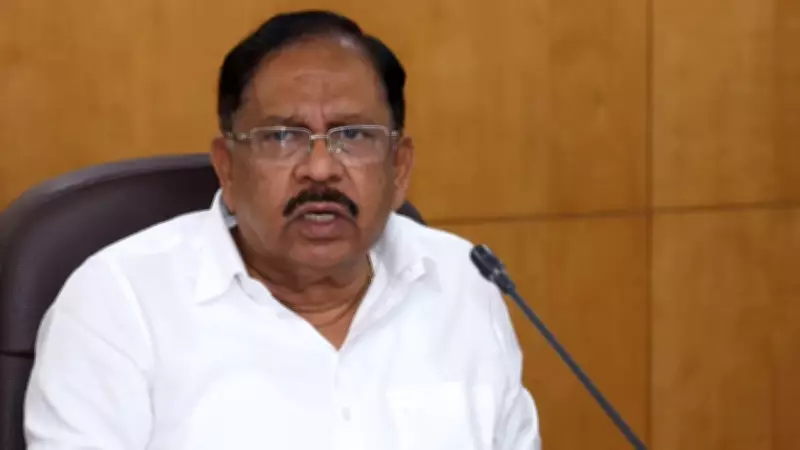
Karnataka Home Minister G Parameshwara on Monday made a significant allegation against Governor Thaawar Chand Gehlot, claiming that the governor has referred the contentious Hate Speech and Hate Crime (Prevention) Bill to President Droupadi Murmu. Parameshwara characterized this move as a deliberate attempt to "dump it in cold storage" and prevent it from becoming law.
Bill's Journey and Gubernatorial Scrutiny
The legislation, which was passed by both Houses of the Karnataka legislature during the winter session held in Belagavi, was formally sent to Governor Gehlot in December for his assent. According to Parameshwara, the governor has raised 28 specific points of contention regarding the bill's provisions. The Home Minister stated, "If the President sends it back to us with her observations, then we will do something and send it again (for gubernatorial assent)."
Defending the Legislation's Necessity
Parameshwara strongly defended the bill, describing it as a consciously crafted and necessary safeguard for society. "We have freedom of speech, but that does not mean that one can say anything. We have to see how it impacts our society. Hence, the bill was introduced," he explained. He further cited multiple instances of hate speech that prompted the government to consider enacting such a law.

Political Accusations and Counterclaims
Directly targeting the opposition Bharatiya Janata Party (BJP), Parameshwara questioned their motives. "If you still say that this is not proper, then what are your motives? Should it mean that anyone can abuse anyone? Should we allow any disturbance in society?" He alleged that Governor Gehlot does not want the bill to become law, stating, "In my opinion, the Governor has intentionally referred it to the President, so that it does not come into effect. He wants it to be shelved forever."
BJP's Strong Opposition
BJP state president Vijayendra launched a sharp critique of the bill, accusing the Congress government of bringing it with the sole intention of suppressing the opposition and curbing democratic voices in Karnataka. He criticized the manner in which the legislation was cleared during the Belagavi session, alleging it was rushed through without proper deliberation.
Vijayendra asserted, "This bill is dangerous to the democratic system." He provided an example to support his claim, referencing an incident in Tarikere, Chikkamagaluru district, involving Hindu activist Vikas Puttur. "Vikas Puttur had not even begun his speech; police officials went there and served him a notice, threatening to arrest him if he spoke," he said.
Regarding the governor's decision not to grant assent, Vijayendra argued, "The proposed legislation itself was flawed and aimed at silencing the opposition."
Broader Context and Future Outlook
When questioned about similar legislative developments in other states like Kerala and Tamil Nadu, Parameshwara offered a measured response, saying, "Let's see what happens in the coming days. I think things will improve." This statement hints at the ongoing broader political and constitutional dynamics surrounding state bills and gubernatorial assent across India.
The controversy underscores a deepening political divide in Karnataka, with the ruling Congress defending the bill as a social necessity and the opposition BJP condemning it as an attack on democratic freedoms. The bill's fate now rests with the President's office, making its future uncertain and highly politicized.