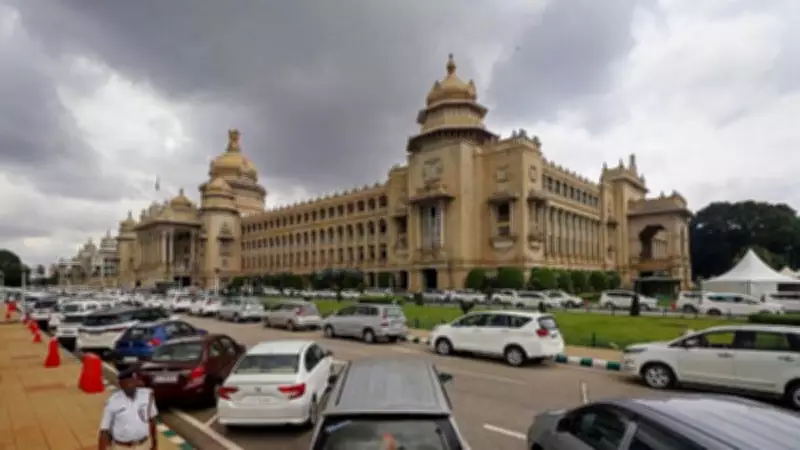
Karnataka Government Under Fire for Media Restrictions at Vidhana Soudha
The Karnataka government is facing intense backlash and widespread condemnation following its decision to impose stringent restrictions on media interactions with legislators at the iconic Vidhana Soudha, the state's legislative building in Bengaluru. This move has sparked a major political controversy, with opposition leaders and media organizations decrying it as an attack on democratic principles and transparency in governance.
Opposition Leaders Decry 'Emergency in Karnataka'
Leader of the Opposition in the Karnataka Legislative Assembly, R Ashoka, has launched a scathing attack on the ruling government, labeling the new restrictions as an 'Emergency in Karnataka'. In a strongly worded statement, Ashoka accused the government of attempting to cover up its failures and rampant corruption by stifling media access and limiting public scrutiny. He argued that such measures undermine the fundamental rights of free speech and press freedom, which are cornerstones of a healthy democracy.
Ashoka emphasized that the restrictions are a blatant effort to prevent legislators from communicating openly with journalists, thereby obstructing the flow of information to the citizens of Karnataka. He called upon the government to immediately revoke these curbs and uphold the democratic values enshrined in the Constitution.

Details of the Media Restrictions
The newly imposed restrictions reportedly include limitations on where and when media personnel can engage with legislators within the Vidhana Soudha premises. Specific measures may involve designated zones for interactions, reduced access during legislative sessions, and potential monitoring of conversations. These rules have raised concerns about the erosion of journalistic independence and the ability of the media to perform its watchdog role effectively.
Media associations and journalists have expressed alarm over the implications of these curbs, warning that they could set a dangerous precedent for other states and lead to a chilling effect on investigative reporting. Many argue that open dialogue between lawmakers and the press is essential for holding the government accountable and ensuring that public issues are addressed transparently.
Government's Stance and Broader Implications
While the Karnataka government has not issued an official detailed response to the criticism, sources suggest that the restrictions might be framed as necessary for maintaining order and security within Vidhana Soudha. However, critics contend that such justifications are insufficient and mask a deeper agenda to control the narrative and avoid scrutiny.
This controversy comes at a time when media freedom and government accountability are under intense scrutiny across India. The incident at Vidhana Soudha highlights ongoing tensions between state authorities and the press, with potential ramifications for political discourse and public trust in Karnataka. Observers note that if left unchecked, such restrictions could escalate, affecting not only media relations but also the overall democratic fabric of the state.
As the debate rages on, stakeholders including civil society groups, legal experts, and citizens are closely monitoring the situation, urging the government to reconsider its stance and foster an environment of openness and dialogue. The outcome of this conflict may significantly influence future media policies and legislative transparency in Karnataka and beyond.