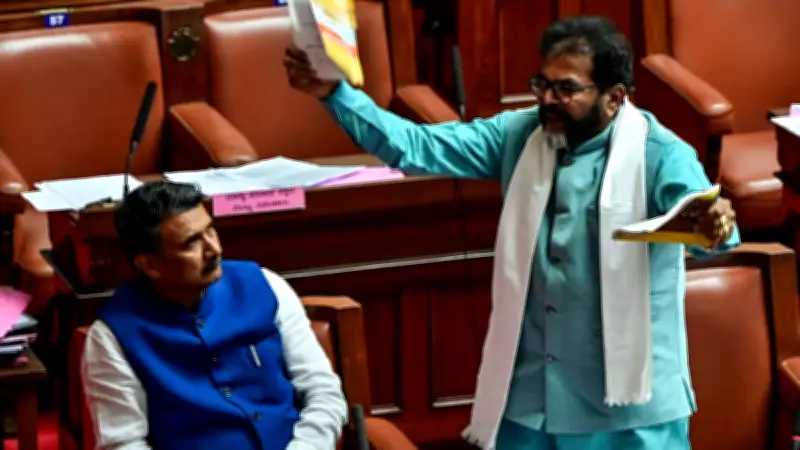
Karnataka Legislative Council Plunges Into Chaos Over Rule Book Incident
The Karnataka Legislative Council witnessed unprecedented scenes of disorder and disruption on Wednesday as opposition leader Chalavadi Narayanaswamy dramatically tore the official Rule Book during a heated session. The act sent shockwaves through the legislative body, bringing proceedings to a complete standstill and creating a chaotic atmosphere in the council chamber.
Chairman's Intervention and Strong Response
In a swift response to restore order, Basavaraj Horatti, the Chairman of the Legislative Council, intervened decisively to address the escalating situation. Expressing deep regret over the incident, Chairman Horatti emphasized the fundamental importance of the Rule Book, describing it as "the Constitution of the Legislative Council" that governs all parliamentary procedures and decorum.
Horatti firmly advised Narayanaswamy to issue a formal apology for his actions, stating that such behavior undermined the dignity and functioning of the legislative institution. The Chairman's intervention highlighted the seriousness with which the breach of parliamentary norms was being treated, as he sought to uphold the sanctity of council proceedings.

Escalating Tensions in Karnataka Politics
This dramatic incident reflects the increasing political tensions within Karnataka's legislative bodies, where opposition and ruling party members have been engaged in frequent confrontations. The tearing of the Rule Book represents one of the most visible symbols of protest in recent council history, raising questions about parliamentary conduct and political discourse in the state.
The chaos in the Legislative Council comes at a time when Karnataka politics has been marked by:
- Intense debates over government policies and legislation
- Growing opposition criticism of ruling party initiatives
- Increasing instances of parliamentary disruptions and protests
- Heightened political polarization between different factions
Broader Implications for Legislative Functioning
Political observers note that such incidents have wider implications for democratic institutions and governance in Karnataka. The Rule Book serves as the foundational document that ensures orderly conduct, fair debate, and proper legislative procedures within the council. Any disregard for these established norms potentially weakens the institution's ability to function effectively.
The incident has sparked discussions about:
- The need for greater respect for parliamentary traditions and rules
- Mechanisms to address political disagreements without disrupting legislative work
- The role of opposition in holding the government accountable while maintaining decorum
- Potential consequences for future council proceedings and inter-party relations
As Karnataka's political landscape continues to evolve, this incident serves as a stark reminder of the challenges facing legislative bodies in maintaining both vigorous debate and institutional dignity. The Chairman's call for an apology and emphasis on the Rule Book's constitutional status underscores the delicate balance between political expression and parliamentary propriety that must be maintained for democratic institutions to function effectively.