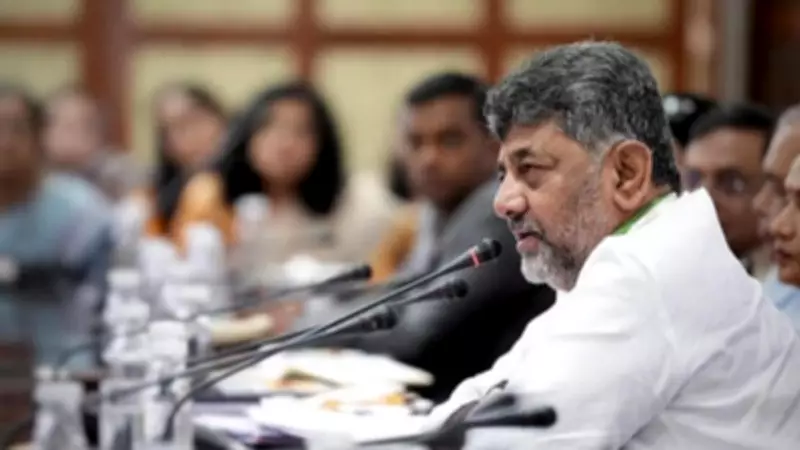
Karnataka Chief Minister DK Shivakumar responded to media queries on Thursday regarding the Bharatiya Janata Party's allegation that no woman was included in his newly formed cabinet. Speaking during a press conference in Bengaluru, Shivakumar said, “Let us see. There are a lot of vacancies. Last time as well, it was not about any one…” The statement came after the BJP criticized the Congress government for not appointing any woman minister in the cabinet sworn in on June 3, 2026.
Former MP Margaret Alva Expresses Disappointment
Former Rajya Sabha member and Congress leader Margaret Alva also voiced her disappointment over the absence of women in the Karnataka cabinet. In a post on social media platform X, she congratulated Shivakumar on being sworn in as Chief Minister and wished him and his team success. However, she added, “I would have loved to have seen at least ONE Congress woman in the new Karnataka Cabinet that was sworn in today. Deeply disappointed that there isn’t.”
Political Reactions and Context
The BJP had earlier accused the Congress government of ignoring women's representation in the state cabinet. The ruling party, however, has defended its position, stating that the cabinet formation is an ongoing process and that more appointments will be made in the future. Shivakumar’s remarks about “vacancies” suggest that women may be included in subsequent expansions of the council of ministers.

The issue has sparked a broader debate on gender representation in Indian politics. Women's rights activists and opposition leaders have called for greater inclusion of women in decision-making roles. The Congress party, which has often championed women's empowerment, faces scrutiny over its commitment to gender parity in its own government.
As of now, the Karnataka cabinet comprises 30 ministers, all of whom are men. The state has a history of low female representation in its cabinets, with only a few women having served as ministers in previous governments. The current situation highlights the challenges in achieving gender balance in Indian politics, despite constitutional guarantees and affirmative action policies.