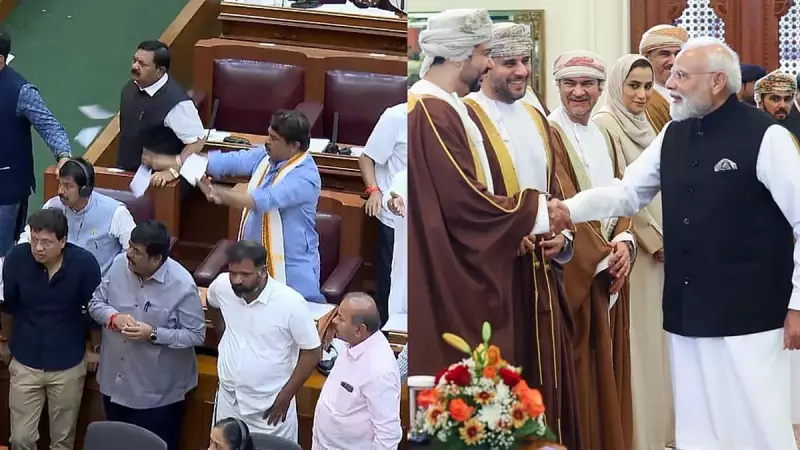
The Karnataka Legislative Assembly witnessed a significant political development on Thursday, December 18, 2025, as it passed a bill aimed at curbing hate speech, a move met with strong resistance from the principal opposition party, the Bharatiya Janata Party (BJP). In a separate but equally crucial national development, India bolstered its economic ties with West Asia by signing a comprehensive Free Trade Agreement (FTA) with the Sultanate of Oman.
Karnataka's Hate Speech Bill Sparks Political Confrontation
The state government, led by the Congress party, successfully pushed through the Karnataka Prevention and Eradication of Inhuman Evil Practices and Black Magic Bill, 2025, which contains stringent provisions against hate speech. The legislative session turned contentious as BJP members vociferously opposed the bill, arguing that it could be misused to target specific communities and curb freedom of expression.
Following a heated debate, the opposition staged a walkout in protest, allowing the ruling party to pass the legislation in their absence. Proponents of the bill assert that it is a necessary legal tool to maintain social harmony and prevent the spread of inflammatory rhetoric that could incite violence between communities. The bill's passage marks a key policy victory for the state government in its current term.
India and Oman Seal Strategic Free Trade Pact
On the international front, December 18, 2025, became a landmark date for Indian trade diplomacy. The governments of India and Oman formally signed a long-negotiated Free Trade Agreement (FTA). This pact is expected to significantly boost bilateral trade and investment by eliminating or reducing tariffs on a wide range of goods and services.
The FTA with Oman is strategically important for India, providing enhanced access to a key Gulf market and potentially serving as a gateway for deeper economic integration with the region. Key sectors like petroleum products, textiles, electronics, pharmaceuticals, and agriculture are likely to benefit from this agreement. It also aims to facilitate easier movement of professionals and strengthen cooperation in new areas of the digital economy.
Implications and the Road Ahead
The day's events highlight two distinct strands of governance: assertive state-level legislation on social issues and proactive federal engagement in global economic partnerships. The Karnataka Hate Speech Bill will now proceed to the Legislative Council for approval, where it may face further scrutiny. Its implementation and judicial interpretation will be closely watched, setting a potential precedent for other states.
Meanwhile, the India-Oman FTA is poised to create new economic opportunities and is a testament to India's growing trade outreach. The agreement requires ratification by both nations' parliaments before its provisions take effect. Experts suggest this deal could increase bilateral trade volumes substantially over the next five years, strengthening India's economic footprint in the Gulf.
Together, these developments underscore a dynamic political and economic landscape, with significant actions unfolding simultaneously in state assemblies and on the global stage.