

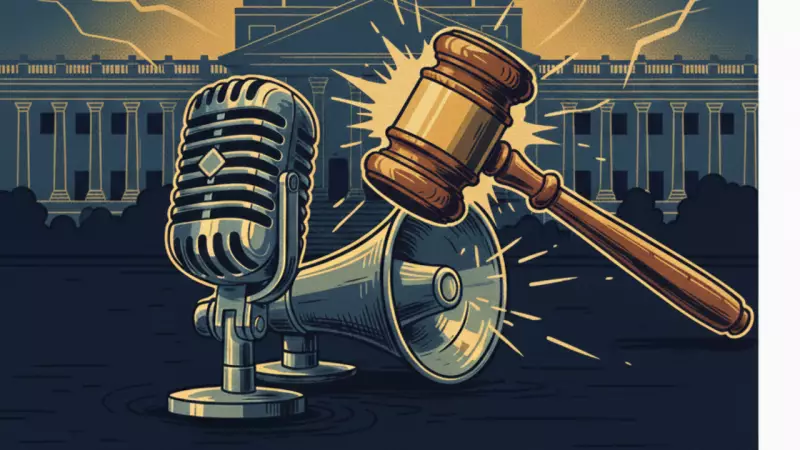
The Karnataka Legislative Assembly on Thursday approved the contentious Hate Speech and Hate Crimes (Prevention and Control) Bill, 2025, sparking a fierce political debate. The ruling Congress government pushed the legislation through despite vehement opposition from the Bharatiya Janata Party (BJP).
Why This Bill Was Introduced
State Home Minister G Parameshwara detailed the bill's provisions after it secured passage. The legislation, first tabled on December 10, is a direct response to a spate of communal violence, most notably the May 2025 Mangaluru "revenge killing". This incident involved the murder of Hindu activist Suhas Shetty, who was the prime accused in the 2022 killing of Mohammed Fazil.
Deputy Chief Minister DK Shivakumar stated the bill is central to the government's agenda of preserving peace and ensuring law and order. The law aims to curb hate speech dissemination, prescribe punishments, and ensure victims receive adequate compensation.

Key Definitions and Punishments Under the New Law
The bill provides a broad definition of hate speech. It covers any public expression—spoken, written, or digital—intended to cause injury, hatred, or ill-will based on specific grounds. These include religion, race, caste, gender, sexual orientation, disability, language, and place of birth, making its protective scope wider than many existing laws.
A hate crime is defined not just as making hate speech but also promoting, propagating, or attempting to cause disharmony through it. This means both originators and amplifiers can face legal action.
Stringent Penalties and Exemptions
The prescribed punishment for a hate crime or hate speech is imprisonment of up to three years, a fine of up to Rs 5,000, or both. These are classified as non-cognisable and non-bailable offences. For repeat offenders, the jail term can extend to 10 years.
However, the bill includes crucial exemptions. Material deemed in the interest of science, art, learning, or bona fide religious practices is protected from prosecution. Liability also extends to organisations and institutions, including unregistered groups, whose leadership can be held responsible unless they prove due diligence.
Political Backlash and Legal Context
The BJP has launched a scathing attack on the bill, labelling it a political weapon. Leader of Opposition R Ashoka accused the Congress of an "obsession" to stifle freedom of expression, particularly of political rivals. BJP MLC Chalavadi Narayanaswamy echoed this, alleging the law aims to target the opposition selectively.
The legislation clarifies it operates in addition to existing laws like the Bharatiya Nyaya Sanhita, 2023, and the Information Technology Act, 2000, and does not override them. The political showdown ensures this bill will remain a hot-button issue in Karnataka's polity.






