

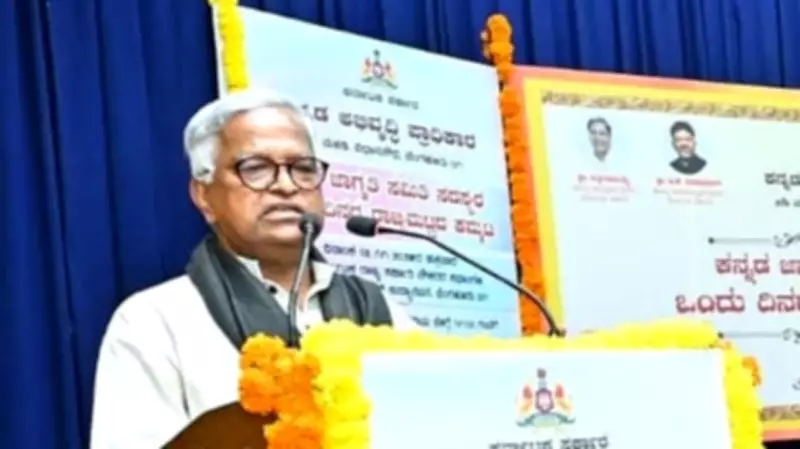
Kannada Development Authority Chief Directs ATI to Investigate Language Compliance
In a significant move to bolster the use of Kannada in official domains, the Chairman of the Kannada Development Authority (KDA), Dr. S.G. Siddaramaiah, has issued a directive to the Administrative Training Institute (ATI) to launch a comprehensive probe into the adherence to Kannada language compliance across government departments and institutions in Karnataka. This initiative aims to ensure that the state's official language is effectively implemented in all administrative and public spheres, reinforcing its cultural and legal status.
Details of the Directive
Dr. Siddaramaiah, a prominent figure in promoting Kannada, has formally requested the ATI to examine the current state of Kannada usage in government offices, educational institutions, and other public entities. The investigation will focus on assessing whether these bodies are complying with existing laws and regulations that mandate the use of Kannada in official communications, signage, and documentation. This step is seen as a proactive measure to address any lapses and streamline language policies, thereby enhancing accessibility and inclusivity for Kannada-speaking citizens.
Background and Context
The Kannada Development Authority, established to safeguard and promote the Kannada language, has been actively working to enforce language compliance in line with Karnataka's linguistic heritage. Despite legislative frameworks in place, there have been concerns about inconsistent implementation, prompting this call for a detailed inquiry. The ATI, known for its role in training government officials, is expected to leverage its expertise to conduct a systematic review and provide actionable recommendations to improve compliance rates.

Implications and Expected Outcomes
This directive is anticipated to have far-reaching implications for language policy in Karnataka. By involving the ATI, the KDA aims to foster a more rigorous monitoring mechanism that could lead to enhanced enforcement of Kannada usage. The probe is likely to identify gaps in compliance, propose corrective measures, and potentially influence future training programs for government personnel to better integrate Kannada into their daily operations. This effort underscores the state's commitment to preserving its linguistic identity while ensuring efficient governance.
Conclusion
In summary, the Kannada Development Authority's call for an ATI investigation marks a pivotal step in strengthening language compliance across Karnataka. As the probe unfolds, it is expected to shed light on current practices and pave the way for more robust implementation of Kannada in public life, aligning with broader cultural and administrative goals.






