Jammu and Kashmir Assembly Session Faces Major Disruption Over Regional Identity Remark
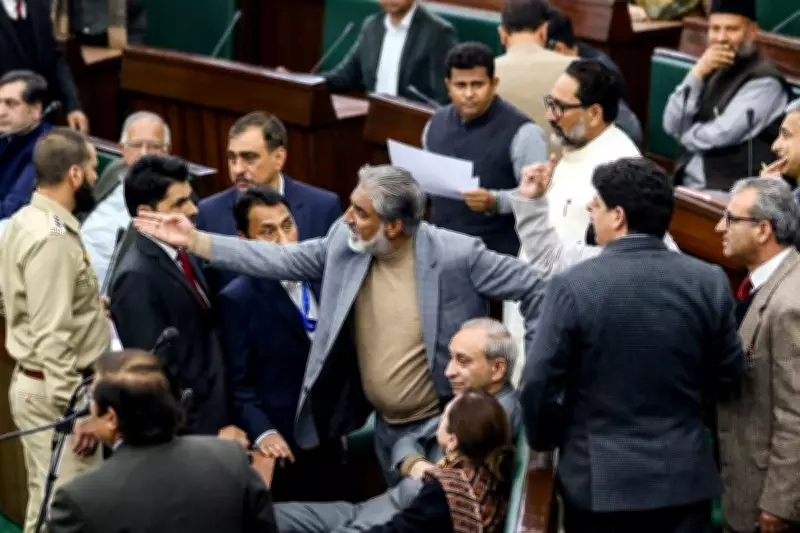
The legislative proceedings in the Jammu and Kashmir Assembly were brought to a standstill on Thursday as opposition members staged a vociferous protest. The disruption centered around a contentious remark made by the Leader of the Opposition regarding the official status of the Pir Panjal region, sparking a heated debate on regional identity and administrative recognition.
Controversial Statement Ignites Opposition Fury
During a discussion on developmental issues, the Leader of the Opposition reportedly questioned the existence of an officially designated Pir Panjal region within the Union Territory's administrative framework. This statement immediately drew sharp criticism from opposition legislators, who argued that it undermined the cultural and geographical significance of the area. Members from various opposition parties rose from their seats, demanding an immediate retraction and apology, which led to chaotic scenes in the assembly hall.
Historical and Cultural Context of Pir Panjal
The Pir Panjal range is a major sub-range of the Himalayas, stretching across parts of Jammu and Kashmir, Himachal Pradesh, and Pakistan-administered Kashmir. In the context of Jammu and Kashmir, it encompasses districts such as Rajouri and Poonch, which have distinct cultural and historical identities. Opposition members emphasized that the region has long been recognized in local discourse and deserves formal acknowledgment in governance structures. They highlighted ongoing demands for better infrastructure, healthcare, and educational facilities in these areas, arguing that dismissing its official status could hinder development efforts.

Government's Response and Assembly Proceedings
In response to the uproar, the treasury bench attempted to calm the situation, with some members clarifying that while the term Pir Panjal region is commonly used in public and political parlance, it may not have a specific administrative definition in official documents. However, this explanation failed to pacify the opposition, leading to repeated adjournments of the session. The Speaker intervened multiple times, urging members to maintain decorum and focus on legislative business, but the protests continued, effectively halting discussions on other important agenda items.
Broader Implications for Regional Politics
This incident underscores the sensitive nature of regional identities in Jammu and Kashmir, where issues of recognition and representation often fuel political tensions. Analysts suggest that such disruptions reflect deeper concerns about equitable development and political inclusivity in the Union Territory. The controversy has sparked debates beyond the assembly, with civil society groups and local residents expressing mixed reactions. Some support the opposition's stance, calling for greater official recognition of sub-regions, while others urge politicians to prioritize governance over symbolic disputes.
Looking Ahead: Potential Resolutions and Impact
As the assembly session remains in deadlock, there are calls for dialogue to address the underlying issues. Possible steps include:
- Formal discussions on defining and recognizing various regions within Jammu and Kashmir for administrative purposes.
- Commitments from the government to ensure balanced development across all areas, including Pir Panjal.
- Revised protocols for assembly conduct to prevent similar disruptions in the future.
The outcome of this dispute could influence upcoming political engagements and development policies in the region, making it a critical point of observation for stakeholders.