
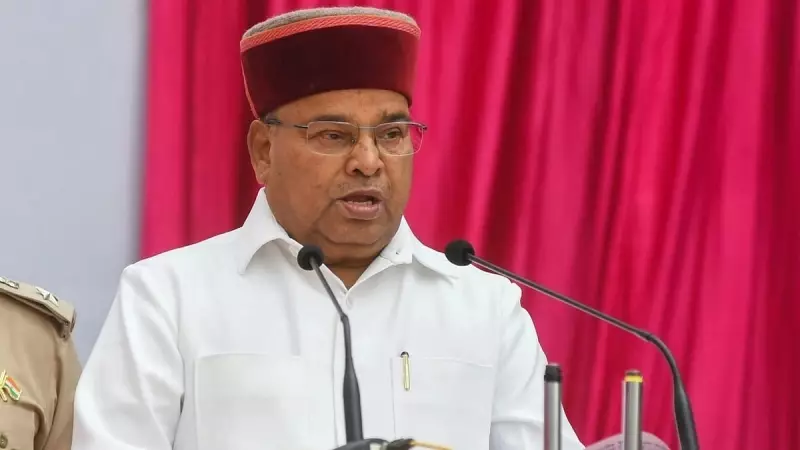
A significant political development unfolded in Karnataka as the Janata Dal (Secular) formally petitioned the state's Governor to withhold assent from a contentious legislative proposal. The party has raised a red flag, asserting that the Karnataka Hate Speech Bill poses a direct challenge to a fundamental constitutional right.
Delegation Meets Governor, Presents Case
On 31 December 2025, a high-level delegation from the JD(S) met with Karnataka Governor Thaawar Chand Gehlot at the Raj Bhavan. The team was led by the party's floor leader in the Legislative Assembly, C B Suresh Babu. The core objective of the meeting was to present a formal appeal, urging the Governor to exercise his power and refuse his assent to the bill passed by the state legislature.
Constitutional Concerns at the Forefront
The JD(S) leaders presented a detailed argument against the proposed legislation. Their primary contention is that the bill, in its present form, poses a significant threat to the Freedom of Speech and Expression. They emphasized that this freedom is a cornerstone of Indian democracy, explicitly protected under Article 19 (1) (a) of the Constitution of India.
The party's representatives argued that while curbing hate speech is a legitimate aim, the current provisions of the bill are overly broad and could be misused to stifle legitimate dissent, political criticism, and free expression. They expressed concern that it could lead to arbitrary application and potentially silence voices in opposition and civil society.
Political Repercussions and Next Steps
This move by the JD(S) sets the stage for a potential constitutional and political standoff. By appealing directly to the Governor, the party is employing a key check-and-balance mechanism in the law-making process. The Governor's decision is now highly anticipated. He can either grant assent, send the bill back to the Assembly for reconsideration, or reserve it for the consideration of the President of India.
The petition underscores the ongoing debate in India balancing the need to maintain social harmony and prevent hate speech with the imperative to protect freedom of speech. The outcome will have significant implications for legal and political discourse in Karnataka and could set a precedent for similar laws in other states.