The serene fringes of forests in Telangana have transformed into perilous death zones. A shocking practice of illegally tapping agricultural power lines and laying live electric wires is causing a surge in wildlife deaths and posing a severe threat to humans, the state's forest department has warned.
Electrocution Emerges as a Primary Poaching Tool
Recent fatalities of animals in areas under the Recognition of Forest Rights (RoFR) Act have been directly linked to this brutal method. Khammam District Forest Officer Sidhath Vikram Singh, IFS, highlighted in a detailed presentation that unauthorised wiring is deliberately drawn from nearby electricity poles into reserve forests. "Electricity is being misused as a weapon," Singh stated. Poachers strategically place these live wires near waterholes and nalas, ensuring animals coming to drink are electrocuted. This method, he noted, has become one of the most dangerous forms of hunting prevalent today.
The danger is not confined to wildlife. Forest authorities flagged that these invisible traps create a lethal hazard for anyone moving along forest-edge paths. The same wires that kill a sambar deer can also electrocute villagers, cattle grazers, and even security personnel. The department cited tragic incidents where civilians and anti-Maoist commandos, as well as CRPF personnel, lost their lives after stumbling into snares originally set for hunting animals.

A Pattern of Stealth and Sustained Trade
The poachers operate with chilling precision to avoid detection. According to officials, they typically work in the early hours, around 4 to 5 AM, when forest staff movement is minimal. They clear entire patches of vegetation to prevent short circuits before fixing pegs and live wires into the ground. Once an animal is electrocuted, it is quickly removed, leaving behind almost no trace.
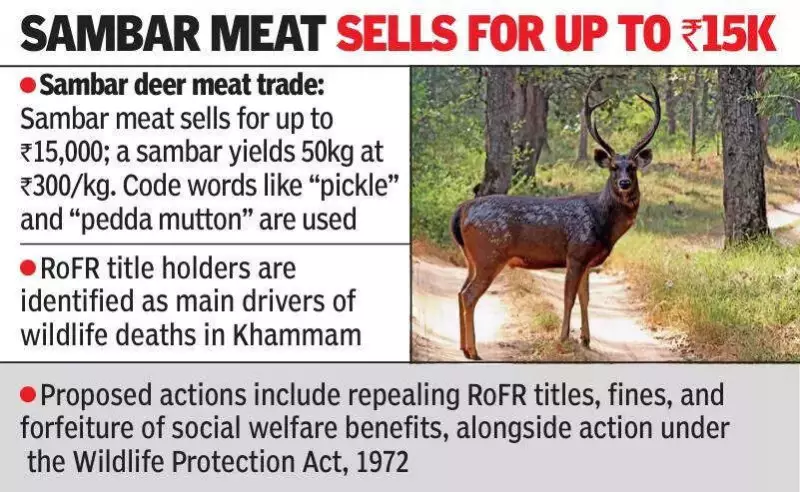
The trade driving this destruction is lucrative. Sambar deer meat fetches up to ₹300 per kilogram, with a single animal yielding about 50 kg, making it a ₹15,000 prize. The business uses code words like "pickle" and "pedda mutton" to discreetly refer to illegal wild meat. The department also continues to find conventional snares, booking individuals like Bhukya Bhasha and Bhukya Harilal under the Wildlife Protection Act after they trapped an Indian porcupine near Gudithanda village on November 23.
Authorities Propose Stringent Countermeasures
Forest officials have identified RoFR title holders as primary drivers of these wildlife deaths in Khammam. In response, the department has proposed drastic measures, including repealing RoFR titles of offenders, imposing fines, and forfeiting their social welfare benefits, alongside legal action under the Wildlife Protection Act, 1972.
Telangana Principal Chief Conservator of Forests C Suvarna emphasized that curbing this menace is a shared responsibility. "Electrocution is the major reason for poaching. It is the responsibility of the Electricity Department to curb this," Suvarna said. The forest department has held coordination meetings with the power utility and plans another in January 2026. They suggest using trip logs that record power fluctuations to pinpoint locations of illegal current draw for inspection and action.
DFO Singh pushed for tighter control, recommending that night-time agricultural power supply be restricted in RoFR areas when there is no cultivation activity, as unchecked flow enables these crimes. He stressed that regulating power in these pockets is now a critical community safety and conservation issue.
The department's recommendations for a multi-pronged solution include:

- Closer monitoring of electric poles by linemen in forest-fringe villages.
- Forming joint protection committees with police, electricity boards, panchayats, and local representatives.
- Installing CCTVs and thermal cameras at vulnerable locations.
- Running extensive awareness campaigns in villages, theatres, and bus stands.
- Displaying wildlife crime control numbers prominently.
Officials are also leveraging the strengthened Wildlife Amendment Act, 2023, which has increased fines for offences outside sanctuaries and national parks from ₹25,000 to ₹1,00,000. They are pressing for wildlife deaths to be treated as cognizable offences to ensure stricter bail conditions. Simultaneously, they recommend engaging poor poachers in skill development programmes to provide alternative livelihood options.