The political landscape of West Bengal has been roiled by a fresh controversy involving the Indian Political Action Committee (I-PAC), the election strategy firm founded by political strategist Prashant Kishor. The row centers on allegations that I-PAC is simultaneously working for the ruling Trinamool Congress (TMC) and the opposition Bharatiya Janata Party (BJP), a claim that has sparked a fierce war of words and raised serious questions about political ethics and transparency.
The Core of the Controversy: Dual Allegiance Allegations
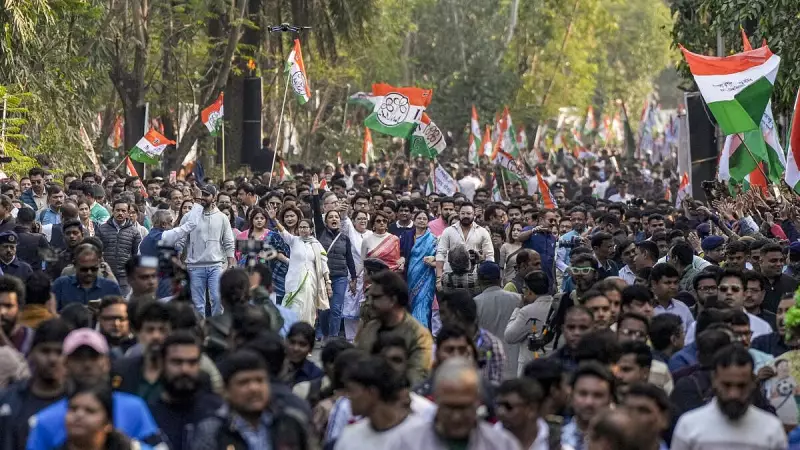
The firestorm began when senior TMC leader and MP, Abhishek Banerjee, launched a sharp attack on I-PAC. He alleged that the political consultancy was "playing a double game" by offering its services to the TMC while also engaging with the BJP. Banerjee's accusations, made during a public meeting, suggested a betrayal of trust, implying I-PAC was leveraging its inside knowledge of the TMC's strategies to benefit the BJP.
In response, I-PAC issued a strong rebuttal, categorically denying any professional engagement with the BJP. The firm stated that its contractual association with the TMC concluded in June 2021, following the assembly elections. I-PAC emphasized that it has not undertaken any paid or voluntary work for the BJP since then. The firm framed Abhishek Banerjee's comments as an attempt to malign its reputation and create a false narrative for political gain.
Political Repercussions and Escalating Tensions
The fallout from these allegations has been significant and multi-layered. The BJP in West Bengal was quick to seize the opportunity, using the controversy to attack the TMC's internal cohesion. BJP leaders questioned the TMC's judgment in previously relying on an external agency and painted the incident as a sign of growing fissures within the ruling party. The controversy has provided the BJP with fresh ammunition to challenge the TMC's narrative of a united front.
For the TMC, the episode has exposed potential internal tensions. Abhishek Banerjee's public outburst was seen by many observers as more than just an attack on an external agency; it was interpreted as an indirect critique of the party's existing strategic decisions and possibly a power play within the party's upper echelons. The row has shifted focus from governance to internal discord, a situation any ruling party seeks to avoid.
Broader Implications for Political Consulting in India
Beyond the immediate political sparring in Kolkata, the I-PAC controversy raises larger, uncomfortable questions about the role of private political consultancies in Indian democracy. Firms like I-PAC wield immense influence, shaping campaign narratives, voter outreach, and electoral strategies for multiple parties across the country.
This incident highlights the lack of a regulatory framework governing such entities. Key concerns include:
- Conflict of Interest: How can data and strategies developed for one party be kept confidential when the same firm works with rival parties in different states or in subsequent elections?
- Transparency: Should there be mandatory disclosure of contracts between political parties and private consultancies?
- Accountability: To whom are these powerful, unelected firms ultimately accountable?
The I-PAC row serves as a stark reminder that the business of winning elections has become a professional, high-stakes industry. While Prashant Kishor and I-PAC have denied the specific allegations of working for the BJP concurrently, the episode has ignited a crucial debate on the need for clearer norms and transparency in political campaigning. As West Bengal braces for future electoral battles, the shadow of this controversy is likely to linger, influencing strategies and political discourse in the state.