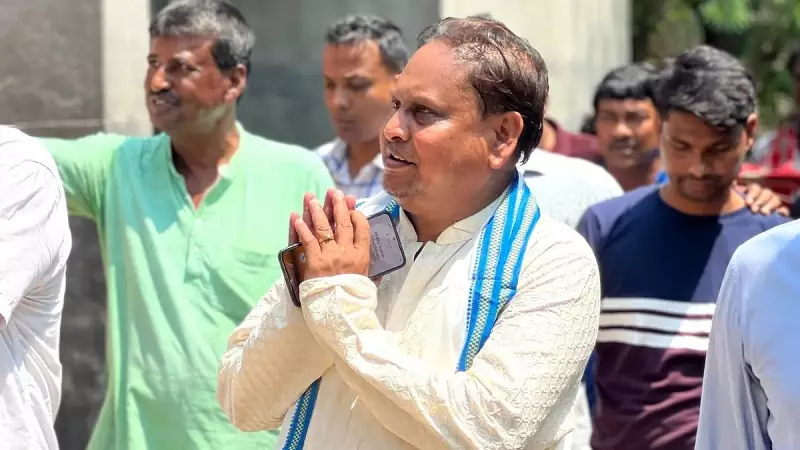
A significant incident involving a political leader's family member and the Kolkata Police has stirred controversy in West Bengal. The son of Humayun Kabir, the president of the Indian Union Muslim League (IUML)'s state unit, widely known as the Jamiat Ulama-e-Pershad (JUP), was detained by police for allegedly assaulting an on-duty officer.
Detention Following Alleged Assault on Officer
The episode unfolded in the bustling Taltala area of central Kolkata. According to police reports, the individual, identified as Humayun Kabir's son, was involved in an altercation that turned physical. The central allegation is that he assaulted a policeman who was performing his official duties. This led to his immediate detention by officers from the local Taltala police station.
Law enforcement officials confirmed the sequence of events, stating that the action was taken based on the complaint filed by the assaulted policeman. The detention was not an arrest but a procedural step for questioning regarding the serious charges of obstructing and attacking a public servant.
Release After Eight Hours and Political Backlash
After being held for approximately eight hours, Humayun Kabir's son was released from police custody. The release has sparked discussions and raised questions about the handling of the case, though police authorities maintained that due procedure was followed throughout the process.
The incident quickly took a political turn. Humayun Kabir, a notable figure in West Bengal's political landscape, leads the JUP. Following his son's detention, Kabir publicly accused the ruling Trinamool Congress (TMC) government of orchestrating a "political conspiracy" against him and his family. He claimed the entire event was fabricated to target him due to his political stance and activities.
Police Stand Firm Amidst Allegations
In response to the accusations of a conspiracy, the Kolkata Police have presented a firm stance. Officials have denied any political motivation behind the detention. They assert that the action was a direct and lawful response to a criminal complaint of assault on a uniformed officer, emphasizing that the law applies equally to all citizens irrespective of their social or political background.
The police version of events underscores a clear narrative: an officer was assaulted while on duty, leading to a legitimate detention for investigation. The release after eight hours is framed as part of the standard legal process following initial questioning.
This incident highlights the often-tense intersection of law, order, and politics in the state. It raises pertinent questions about accountability, the application of law, and how such events are interpreted through a political lens. The fallout from this brief detention continues to resonate within political circles and the public discourse in Kolkata.