

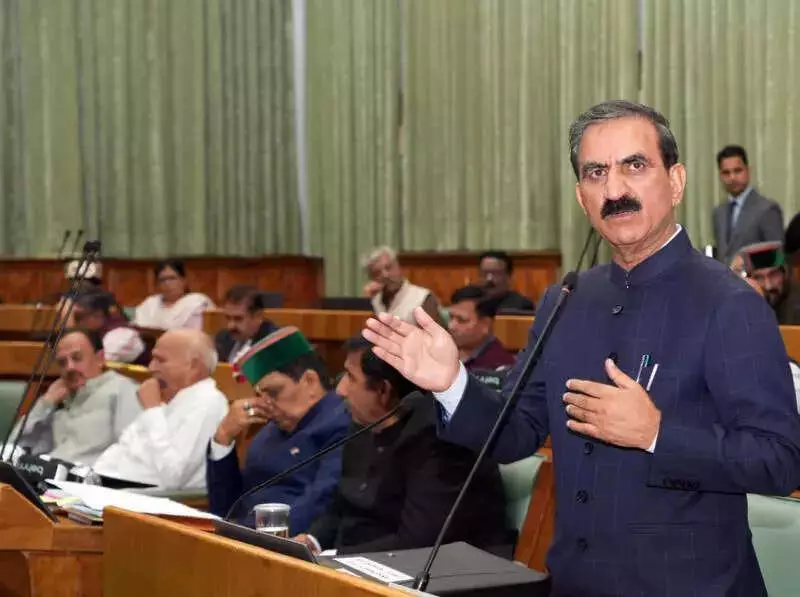
The Himachal Pradesh Legislative Assembly has decided to send a proposed amendment to a key land protection law to a Select Committee for detailed examination. This move came after strong objections were raised by the opposition, warning that the changes could undermine the interests of the state's residents.
Bill Presented, Opposition Raises Alarm
During the post-lunch session of the assembly on Friday, Revenue Minister Jagat Singh Negi presented the 'Himachal Pradesh Tenancy and Land Reforms (Amendment) Bill, 2025'. The bill seeks to modify provisions under Section 118 of the Himachal Pradesh Tenancy and Land Reforms Act, 1972.
However, BJP MLA Randhir Sharma immediately demanded that the bill be referred to a Select Committee for thorough scrutiny. Sharma argued that Section 118 acts as a vital safeguard for Himachalis by restricting outsiders from purchasing land in the state. He expressed deep concern that diluting this section, even with the aim of attracting investment, could have severe and long-lasting consequences.

"Given the repercussions, this amendment bill must be withdrawn. And if the govt doesn't want to withdraw it, then at least the amendment requires to be scrutinised by the Select Committee of the Assembly," Sharma asserted in the house.
Speaker's Ruling and Committee Formation
Following a nod from Chief Minister Sukhvinder Singh Sukhu on the request, Speaker Kuldeep Singh Pathania ordered the bill to be sent to the Select Committee. The speaker outlined the next steps, stating that the revenue minister would soon issue a notification to form the committee.
"The committee will have members from both parties. The Select Committee will have a fixed period and, after discussion, submit its report to the Vidhan Sabha in the budget session," Speaker Pathania clarified. This ensures a bipartisan review of the proposed legislation within a defined timeline.
What Does the Amendment Bill Propose?
The amendment bill, originally introduced by Minister Negi on December 2, contains several significant proposals. The primary change is to allow non-agriculturists to purchase flats developed by private real estate developers in Himachal Pradesh.
Furthermore, the bill seeks to extend the existing exemption related to buying land and flats from the Himachal Pradesh Housing and Urban Development Authority (HPDUA) to subsequent purchasers. To boost rural business activity, it proposes to exempt short-term leases of buildings for up to 10 years from the purview of Section 118.
A major provision aims to empower cooperative societies. The bill draft notes that while the co-operative movement is widespread and most society members are agriculturists, the societies themselves, as separate legal entities, cannot buy land. The amendment proposes to allow such societies, composed entirely of agriculturist members, to acquire land without needing permission under Section 118.
The government's rationale, as stated in the draft, is that this will enable agriculturists to start new ventures using their own land, leading to job creation, increased per capita income, and a stronger state economy.
The decision to send the bill to the Select Committee highlights the sensitive nature of land laws in the hill state and sets the stage for a detailed debate on balancing economic development with the protection of local interests.






