Assam Chief Minister's Polarizing Rhetoric Draws Constitutional Criticism
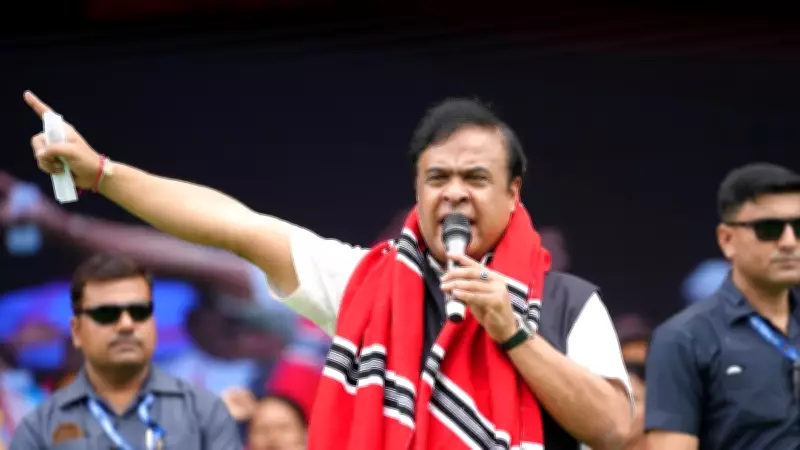
Assam Chief Minister Himanta Biswa Sarma has ignited a fresh political firestorm with his latest remarks targeting Bengali-origin Muslims, whom he referred to using the pejorative term "Miyas." In the run-up to the crucial state Assembly elections, Sarma's statements have triggered vehement opposition backlash, with the Congress and AIUDF accusing him of practicing "hate politics" and undermining constitutional principles.
Controversial Calls for Mass Complaints and Harassment
The controversy centers on Sarma's public declaration that he has instructed BJP workers to file en masse complaints against the inclusion of Bengali-origin Muslims in voter lists using Form 7 objections. Furthermore, he explicitly called upon the general public to "trouble Miyas" in everyday interactions, suggesting tactics like underpaying rickshaw fares. "Only if they face troubles will they leave Assam," Sarma stated, framing these actions as necessary for protecting Assamese identity.
These remarks represent an escalation of months of increasingly polarizing rhetoric from the Chief Minister, who has previously described the upcoming elections as a "civilisational fight" against this community. Sarma has consistently referred to Bengali-origin Muslims as "osinaki manuh" (unknown or unfamiliar people) and advocated for their economic and social boycott across multiple public addresses.

Opposition Condemns "Unprecedented Low" in Political Discourse
Opposition leaders have launched scathing attacks on what they characterize as dangerous narrative creation for electoral gain. AIUDF MLA Aminul Islam accused Sarma of reaching an "unprecedented low" in political discourse by encouraging exploitation of poor laborers and creating an environment where punishing Muslims becomes politically advantageous.
"This is a policy of hate, a trend of claiming that the more we punish Muslims, the better ministers we are," Islam asserted, noting that such rhetoric leaves no space for development-based campaigning. He highlighted multiple instances where Sarma has allegedly discouraged employment of Muslims across various sectors while simultaneously criticizing their educational and economic advancement.
Constitutional Concerns and Election Commission Independence Questioned
Assam Mahila Congress president Mira Borthakur raised serious constitutional concerns, stating that Sarma "doesn't understand the dignity" of his constitutional position in a secular democracy. She further accused the Chief Minister of revealing how the BJP allegedly dictates to the Election Commission, reducing it to what she termed a "puppet" institution.
The opposition has particularly objected to Sarma's predictions regarding the Special Intensive Revision (SIR) of electoral rolls, where he claimed "4-5 lakh Miya votes will have to be cut," viewing this as prejudicial interference in electoral processes.
Supreme Court Judgment Cited in Defense
Facing mounting criticism, Sarma defended his position by referencing the 2005 Supreme Court judgment in the Sarbananda Sonowal vs Union of India case. In a social media post, he highlighted how the judgment quoted a 1998 report by then Assam Governor Lt Gen S K Sinha (Retd) that warned of "demographic invasion" potentially leading to territorial loss and national unity concerns.
"When the highest Constitutional court of the country uses words like 'demographic invasion' and warns of possible loss of territory and national unity, acknowledging that reality is neither hatred nor communalism," Sarma argued, positioning his stance as recognition of what he called a "grave and long-standing problem" rather than an attack on any community.

Congress Leader's Scathing Rebuttal
Senior Congress leader Pawan Khera delivered a blistering response to Sarma's defense, dismissing the constitutional arguments and redirecting focus to alleged land scandals. "We are not asking you to explain your thug-level hateful language. We know this is who you are," Khera stated, accusing Sarma of "brazen robbery" of Assam's protected lands while pursuing divisive politics.
The exchange underscores how the "Miya" controversy has become a flashpoint in Assam's political landscape, intertwining issues of identity, constitutional morality, and electoral strategy just as the state prepares for crucial Assembly elections that could determine its political direction for years to come.