Himachal's Toll Hike Creates Financial Barrier for Beet Border Residents
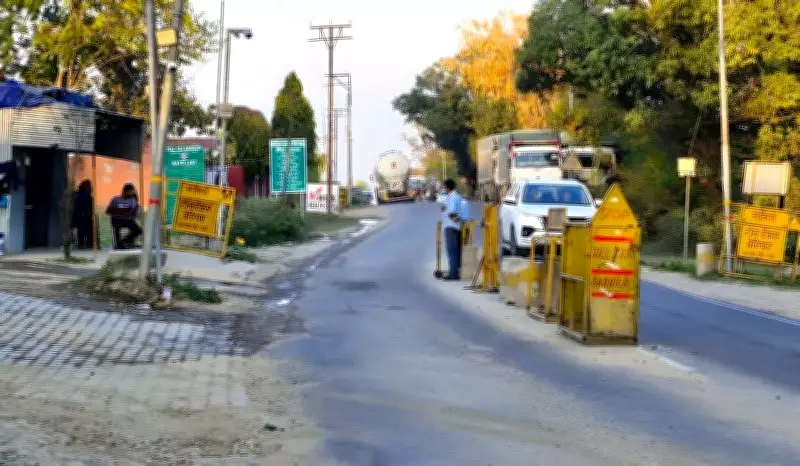
The Himachal Pradesh government's decision to implement a staggering 142 per cent hike in entry toll taxes has sent shockwaves through the border villages of the Beet region. Effective from April 1, 2026, the cost for private cars registered outside Himachal Pradesh to cross the border will surge from Rs 70 to Rs 170. For the residents of Beet, a region historically and culturally unified but administratively split between Punjab and Himachal, this is not merely a tax increase; it represents a severe financial barrier separating their homes, agricultural lands, and family members.
Unique Geography and Historical Division of the Beet Area
The geography of the Beet area is notably unique. Originally, there were 44 villages in the Beet area within unified Punjab, which included present-day Punjab, Haryana, and Himachal Pradesh. Following the 1966 reorganisation, these 44 villages were divided equally between Punjab and Himachal Pradesh. Today, residential houses on the Punjab side and agricultural fields in Himachal are often separated by very short distances. Farmers must cross this invisible state line multiple times daily to tend to their crops, while families frequently visit relatives in adjoining villages that fall under a different state jurisdiction.
Residents Voice Outrage Over Daily Hardships
Sarpanch Jhonowal Balwinder Singh Boparai highlights a critical issue: "The land of Mansowal extends to a vast area of Punjab, to which the only road connectivity is from across the Himachal Pradesh border. Now, if people of the village have to visit their own farmland, lying geographically in Punjab but connected to road through Himachal only, they will have to pay Rs 170 for their car and even Rs 100 for the tractor, they have to take for ploughing their farmland. How can anyone justify it?"

Under the new toll regime, a routine trip to one's own field or a neighbour's house in a private car will incur an exorbitant fee of Rs 170 per entry, making daily life virtually unsustainable for border residents. Different rates apply for various vehicle categories, further complicating matters.
Social Organisation Demands Exemptions and Policy Change
'Voice of the People', a social organisation dedicated to the welfare of this region, has taken a firm stand against the move. Ajaib Singh Boparai, general secretary of Jatt Maha Sabha Punjab and a founding member of the organisation, expressed the deep resentment brewing in the community. "This hike is a direct assault on the social fabric of the Beet region. We aren't tourists visiting a hill station; we are residents whose lives are bifurcated by a border that exists only on paper. Expecting a farmer to pay Rs 170 to reach his own land just across the road is both illogical and heartless," stated Boparai.
He further emphasised the need for a localised policy, adding: "We demand that this hike be revoked immediately. If the government insists on higher taxes for outsiders, they must at least exempt those living within a 10-15 kilometre radius of the border. You cannot tax a man for visiting his own brother or his own soil."
Political Irony and Local Leadership Support
The irony of the situation is underscored by the fact that Himachal's own Deputy Chief Minister, Mukesh Agnihotri, hails from Gondpur Jaichand in the Beet region, while his maternal relatives live in Garhi Mansowal on the Punjab side, two villages separated by a mere half-kilometre.
Local leaders like Numberdar Chaudhary Baij Nath Tabba and Baldev Krishan of the BJP SC Cell have joined Boparai in his plea, noting that 90 per cent of families in this belt share deep blood ties across the state line. They argue that the Congress-led Himachal government must recognise the "Beet identity" and provide exemptions to prevent a total economic and social breakdown in these border villages.
Threat of Protests and Deadline Pressure
The residents of Beet have issued a stern warning of intensified protests if the 10-15 km radius exemption is not granted before the April 1 deadline. This move threatens to exacerbate existing tensions and disrupt the delicate social and economic balance in a region where state borders have long been a mere formality in daily life.