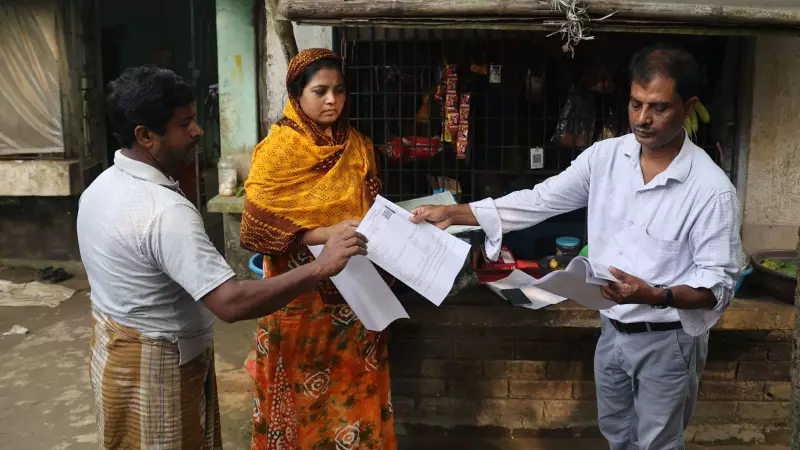
A recent survey has uncovered a concerning trend of high numbers of "untraceable" or "absent" voters in several Matua-dominated assembly constituencies in West Bengal. This follows the completion of the first phase of the Special Intensive Revision (SIR) of the state's electoral rolls.
Survey Data Points to Alarming Deletion Patterns
The data, compiled by the Kolkata-based public policy research institute SABAR, focused on 15 key assembly seats. It revealed that a significant portion of voter deletions in these areas were not due to deaths or permanent relocation, but because the individuals could not be located.
In Krishnaganj, out of 13,200 deletions, a staggering 42.11% were classified as untraceable or absent. This figure surpasses the percentage of deceased voters (33.09%) and those who have permanently shifted (23.52%). Similar patterns were observed in other constituencies: Ranaghat-Uttar Purba (34.56% untraceable out of 15,912 deletions), Bagda (30.02% out of 24,927), Gaighata (23.37% out of 16,718), and Bangaon-Uttar (21.09% out of 26,183).

The institute's survey also included Nabadwip, Krishnanagar-Dakshin, Shantipur, Ranaghat-Uttar Paschim, Ranaghat Dakshin, Chakdaha, Kalyani, Haringhata, Bangaon-Dakshin, and Swarup Nagar, all of which recorded more than 10% absent and untraceable voters.
Researchers Highlight Vulnerability of Matua Community
Experts analyzing the data have raised alarms about the potential disenfranchisement of the Matua community, a socio-economically marginalised group with significant political influence in the state.
Ashin Chakraborty, a researcher at SABAR Institute, stated, "Despite the political narrative, the Matua community is among the most vulnerable in the SIR process. The unmapping rate in the Matua belt is significantly higher than the state average." He emphasized that in constituencies like Krishnaganj, "untraceable" voters are the primary reason for deletion, a phenomenon rare elsewhere in Bengal.
Echoing this concern, Sabir Ahamed, a researcher with the Pratichi Trust, said, "Contrary to popular political narrative, Matuas are found to be the most unmapped groups. Political promises remain largely on paper and a large number of them fear disenfranchisement. The SIR has revealed the hollowness of political promises."
The process allows voters whose names appear on the Absent, Shifted, or Dead (ASD) list to reclaim their franchise by submitting Form 6 to their Booth Level Officer.
Political Slugfest Erupts Over Voter Deletions
The survey findings have ignited a fierce political battle between the ruling Trinamool Congress (TMC) and the Bharatiya Janata Party (BJP), both of whom actively court the Matua vote.
TMC Rajya Sabha MP Mamatabala Thakur criticized the BJP and the SIR process for the deletion of names. On the other side, BJP Lok Sabha MP and Union Minister of State Shantanu Thakur has been urging the Centre to expedite applications under the Citizenship Amendment Act (CAA).
The tension spilled onto the streets recently when supporters of both parties clashed at Thakurnagar. The violence followed a controversial remark by Shantanu Thakur, who said, "if one lakh Hindu voters are required to stop voting for a while to remove 10 lakh infiltrators, then it has to be accepted."
Defending his stance, Shantanu Thakur said on Wednesday, "It is true that names of some people from the Matua community will be struck off from the voter list during SIR. That is why we are asking all to apply for CAA. We assure everyone will get their citizenship, regain their voters rights."
Mamata Thakur of the TMC countered, alleging, "After his (Shantanu) statement, our supporters went to him to seek clarification. But his supporters brutally thrashed our people."
The data and the ensuing political conflict underscore a critical issue of voter identity and inclusion in West Bengal's democratic process, with the marginalised Matua community caught in the crossfire.