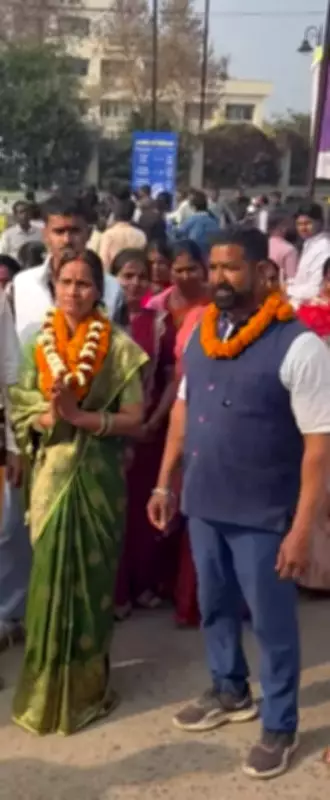
Hazaribag Civic Polls See Trend of Wives Replacing Husbands in Reserved Wards
In a significant development ahead of the Hazaribag Municipal Corporation elections, a notable pattern has emerged where several former male councillors, whose wards are now reserved for women, have officially nominated their wives as candidates. This strategic move comes as the electoral landscape shifts, with 17 out of the total 36 wards being designated as women-reserved constituencies this year, marking a substantial increase aimed at boosting female representation in local governance.
Prominent Examples of Spousal Substitutions
The trend is exemplified by key figures in the political arena. Pamita Sinha, contesting from Ward 20, is the wife of ex-councillor Rajesh, who secured victory in this ward during the 2018 civic body polls. Similarly, in Ward 19, former councillor Vishwanath Vishwakarma has put forward his wife, Sheela Devi, as the candidate. Following suit, Dilip Saw, the former councillor of Ward 24, has nominated his wife, Kranti Devi, for the upcoming election, highlighting a coordinated effort among seasoned politicians to maintain their influence.
Rationale Behind the Strategy
Rajesh, the ex-councillor, elaborated on the decision, stating, "I was elected councillor twice with a comfortable margin and worked closely with residents. As I always stood with the people, I am confident that my wife will be able to carry forward the good works initiated by me, especially since she is receiving strong support from the electorate." Another ward councillor, who preferred to remain anonymous, added, "I dedicated five years of service to my constituency. Now, by supporting my wife's candidacy, I aim to ensure the continuity of developmental works and maintain the trust we have built with the community."

Mixed Reactions from the Electorate
This practice has elicited diverse opinions among voters. Some residents view it as a positive step towards enhancing women's participation in local governance, providing them with opportunities to assume leadership roles and contribute to decision-making processes. Conversely, others perceive it as a tactic to exercise power indirectly, with critics arguing that it undermines the spirit of women's reservation by allowing male incumbents to retain control through familial proxies.
Dhirendra Singh, a teacher and resident of Charhi, commented, "Whether it's an MP, MLA, or councillor, there is a common tendency to cling to power, either directly or through relatives. This trend is not new in our political system." His observation underscores a broader skepticism about the motivations behind such candidacies, raising questions about genuine empowerment versus political maneuvering.
Broader Implications for Local Democracy
The situation in Hazaribag reflects a larger debate on the implementation of women's reservation policies in India. While the increase in reserved wards is intended to foster gender equality and inclusive governance, the emergence of proxy candidates challenges the effectiveness of these measures. It prompts a critical examination of whether such practices truly advance women's leadership or merely perpetuate existing power structures under a different guise.
As the election approaches, all eyes are on how this trend will impact voter behavior and the overall democratic process in Hazaribag. The outcome may set a precedent for similar scenarios in other municipalities across the country, influencing future discussions on electoral reforms and women's representation in politics.