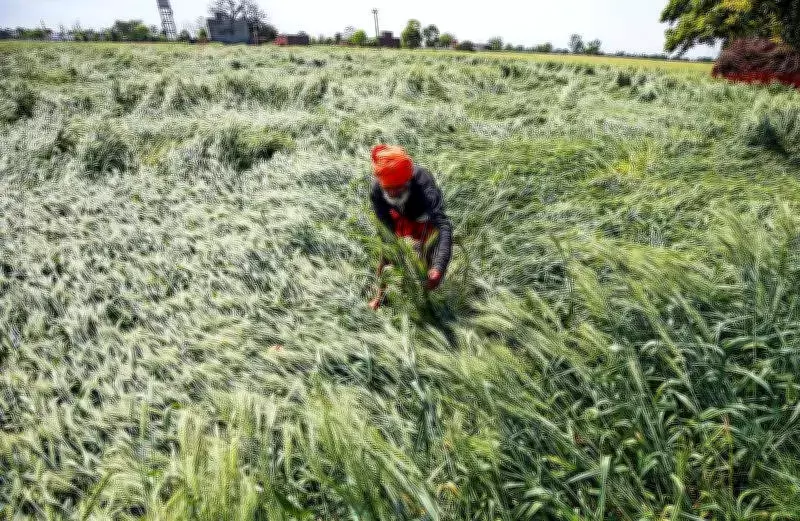
Unseasonal Rains Wreak Havoc on Wheat Harvest in Haryana
Unseasonal rains across Haryana have left thousands of quintals of wheat harvest in mandis drenched, intensifying distress among farmers and commission agents. The situation is particularly alarming in Green Market, Jhajjar, where large quantities of produce lying in the open were damaged, raising serious concerns over procurement management and infrastructure.
Widespread Rainfall and Weather Alerts
Intermittent rainfall was reported on Tuesday in several districts, including Hisar, Gurugram, Karnal, Panipat, Faridabad, Panchkula, and Kaithal. The Meteorological Department has issued an orange alert for 17 districts, warning of rain, strong winds, and hailstorms, further aggravating fears of crop damage.
Key Issues Behind the Damage
A lack of adequate covered storage and delayed lifting of produce have emerged as key reasons behind the damage. Farmers said wheat stocks remained exposed due to slow procurement, leading to piling up in mandis. Many were seen using tarpaulins to protect their crop, but the arrangements proved insufficient against continuous showers.

Procurement System Bottlenecks
Farmers and arhtiyas flagged delays in gate pass approvals and inefficiencies in the online procurement system. They claimed that procedural bottlenecks were slowing down the purchase process, resulting in chaos at mandis. Harender Silana, former president of the grain market association, said the shift from computer-based systems to mobile-based operations had impacted both speed and transparency. Expressing frustration, he remarked, "Both the government and the rain Gods have turned away from us." Silana alleged that authorities remained confined to formalities, with little action on ground-level issues.
Farmer Demands and Criticisms
Mamata Kadiyan, leader of the Bharatiya Kisan Union, said even light rainfall had disrupted wheat sales, indicating that heavier showers could lead to severe losses. She demanded the removal of conditions like biometric verification and called for a return to simpler procurement practices. Farmers also complained about several days of waiting to sell their produce, which was adding to their financial stress.
Official Responses and Responsibilities
Jhajjar Market Committee secretary Ramniwas stated that responsibility for wheat lying in the open rests with commission agents, who were instructed to arrange tarpaulins. He said around 35,600 quintals of wheat had been procured so far. Ramniwas further said once wheat was packed, the responsibility shifted to the procurement agencies. He also noted that farmers were advised not to bring high-moisture wheat to mandis, though many continue to do so due to compulsions.
Political and Expert Concerns
Former chief minister Bhupinder Singh Hooda visited the Sampla mandi and met farmers, labourers, and traders. He criticised the government for imposing multiple conditions, such as portal registration, gate passes, biometric verification, and documentation, which delay procurement. Agriculture experts warn that such weather fluctuations could impact not only wheat harvesting but also vegetables and horticulture. Without timely administrative intervention and improved infrastructure, farmers may face even greater losses in the coming days, they said.