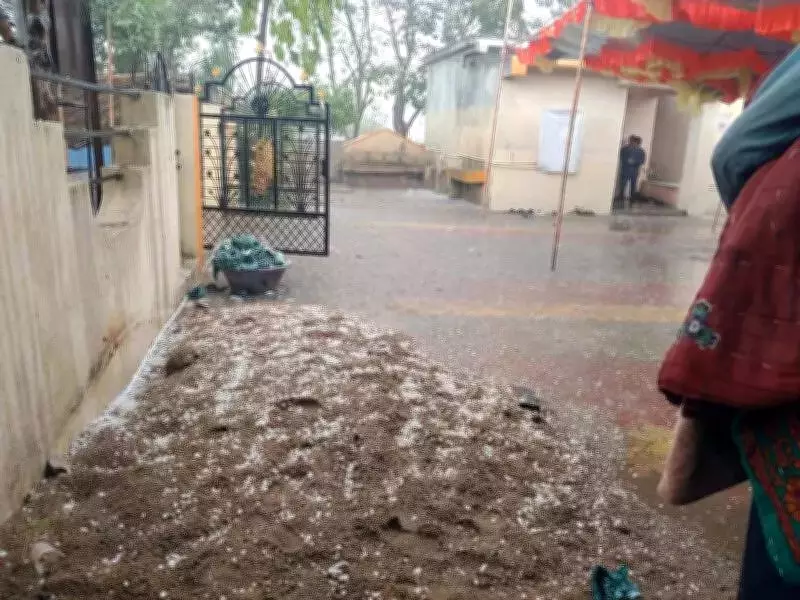
Unseasonal Hailstorm Wreaks Havoc in Akola and Amravati Districts
In a devastating turn of events, unseasonal rain accompanied by fierce winds and a severe hailstorm lashed parts of Akola and Amravati districts on Thursday evening. This extreme weather phenomenon has inflicted significant damage to standing Rabi crops and fruit orchards, raising fresh and urgent concerns among farmers who are already grappling with earlier losses from the previous season.
Widespread Agricultural Devastation Across Multiple Tehsils
In Akola district, several areas within Akot tehsil, including the villages of Savra and Manchanpur, experienced heavy rainfall along with destructive hail. Similarly, in Amravati district, villages such as Vanoja and Wadnergangai in Daryapur tehsil reported intense hailstorm activity. The impact on agriculture has been profound and multifaceted.
According to initial field reports, wheat crops that were on the very verge of harvest suffered considerable and heartbreaking damage. In numerous instances, even harvested produce that had been gathered was ruined by the sudden onslaught. The hailstorm also adversely affected vital fruit crops, including orange, watermelon, banana, and mango orchards. Hailstones caused extensive fruit drop and severe physical damage to the trees and fruits themselves.

Furthermore, standing onion fields were completely flattened and soaked through, which will critically impact both the final yield and the market quality of the produce. This compounding damage threatens the financial stability of countless farming families in the region.
Meteorological Warnings and Farmer Precautions Prove Insufficient
The India Meteorological Department had indeed issued prior warnings for gusty winds, rainfall, and possible hailstorms in parts of the region. Acting on these alerts, some proactive farmers initiated early harvesting as a precautionary measure. However, the abrupt and unexpected intensity of the weather event left the majority of cultivators completely unable to safeguard their valuable produce in time.
This incident compounds the existing distress for the agricultural community. Farmers in this region had already suffered substantial losses due to excessive and unseasonal rainfall during the previous Kharif season. The repeated blows have pushed many to the brink, creating a cycle of debt and uncertainty.
Administrative Response and Urgent Farmer Demands
In response to the crisis, local farmers have urgently appealed to the district administration to conduct immediate panchnama or official damage assessment surveys. They are demanding adequate and timely compensation to help them recover from this dual disaster. Officials have indicated that preliminary surveys are now being initiated to meticulously assess the full extent of the agricultural and property damage. Following this assessment, appropriate relief measures will be considered and implemented.
Authorities have also advised farmers to remain on high alert, as weather forecasts predict intermittent rainfall and gusty winds in isolated pockets over the next several days, posing a continued threat.
Religious Festival Disrupted, Causing Major Losses for Traders
The unseasonal rain and hailstorm also caused widespread disruption and damage during the historic 400-year-old Gudi Padwa festival of the Sant Lakhaji Maharaj Sansthan at Anjangaon Surji in Amravati district on Thursday. Thousands of devotees had traveled from across Maharashtra, Madhya Pradesh, Gujarat, and Mumbai to fulfill religious vows and attend the large-scale fair organized for the occasion.
The severe weather conditions, characterized by strong winds, hailstorm, and heavy rain, ruined numerous shops and stalls set up for the festival. This resulted in huge financial losses for the traders and vendors who depend on such events for their livelihood. Many devotees were tragically forced to abandon their sacred 'Rodgya' or offering ceremonies, and numerous vehicles became stuck in the mud created by the downpour. Fortunately, there were no reported casualties from the festival grounds.
This event underscores how extreme weather can disrupt not only agriculture but also cultural and economic activities, affecting a broad cross-section of society in the region.