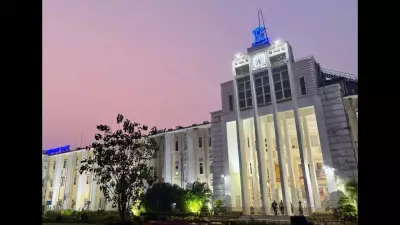
In a significant shift aimed at fostering a global business environment, the Gujarat government has selectively relaxed its stringent prohibition laws within the confines of the Gujarat International Finance Tec-City (GIFT City). This move, the latest in a series of calibrated adjustments, underscores the state's ongoing struggle to balance its historic commitment to a dry state with the practical demands of attracting international investment and talent.
The GIFT City Exception: A Nod to Global Business
The landmark change came in December 2023, when the state allowed the serving of liquor in designated 'wine and dine' areas within GIFT City through a permit system. The official rationale was to provide a "global business ecosystem." This relaxation was further expanded last month, ahead of Christmas, to permit the sale of liquor in any Food & Beverage area, including hotel rooms and terraces, for Indian nationals from outside Gujarat and foreign nationals.
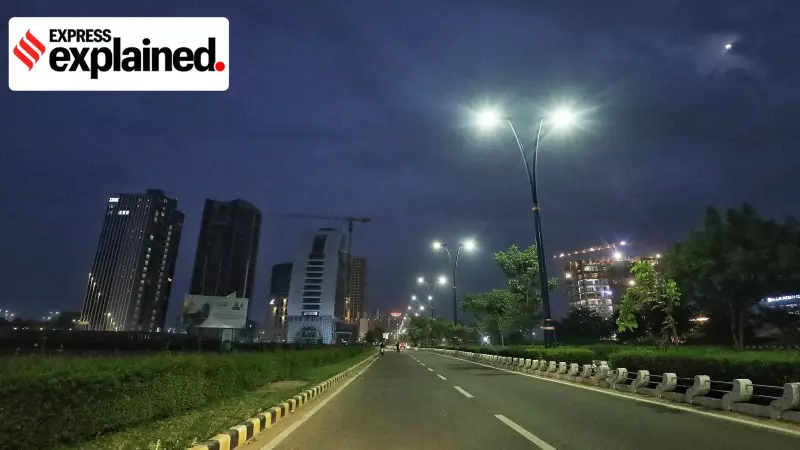
This policy tweak directly addresses long-standing feedback from the international business community. In 2022, Singapore's High Commissioner to India, Simon Wong, had described GIFT City as a "ghost town after working hours." Similarly, a Western diplomat in 2023 informally noted the desire for a casual drink after work as a common expectation. With countries making substantial investments in GIFT City and partnering for the Vibrant Gujarat summits, such perceptions were seen as a deterrent.
However, the uptake has been modest. In the first year of the relaxation, only around 700 permits were issued in GIFT City, which houses about 700 companies and 25,000 employees. Employees reportedly found the process "too cumbersome," prompting the government to streamline the application by reducing one bureaucratic level.
A History of Prohibition and Piecemeal Relaxations
Gujarat's tryst with prohibition is long-standing. The state inherited the Bombay Prohibition Act of 1949 upon its formation in 1960. For decades, the law has been a sensitive subject, with attempts at relaxation often meeting resistance from Gandhian groups and women's rights organizations.
Nevertheless, the state has introduced several exceptions, primarily to attract investment. A key moment came in 2005 under then Chief Minister Narendra Modi, when non-residents in Special Economic Zones (SEZs) were allowed three-year drinking permits if above 21, lowering the age from the earlier limit of 40 for health permits. The state has 20 such SEZs.
The law was dramatically tightened in 2009, introducing the death penalty for cases where toxic alcohol caused casualties, following a hooch tragedy that claimed 156 lives. It was again strengthened in 2016, imposing a minimum of two years imprisonment for drinking and possession, extendable to 10 years.
Interestingly, moves to relax prohibition have consistently preceded the biennial Vibrant Gujarat investor summits. Ahead of the 2007 summit, group permits were allowed for foreign delegates, and 29 hotels were authorized to issue liquor permits with limitations.
The Enforcement Paradox and Social Taboo
The relaxation exists alongside a robust enforcement mechanism against bootlegging. The State Monitoring Cell seizes Indian Made Foreign Liquor (IMFL) worth around Rs 250 crore annually, smuggled from states like Haryana, Rajasthan, Goa, and Maharashtra. In contrast, the Director of Prohibition and Excise issued over 45,500 health permits in 2025.
Despite the legal provisions, consuming alcohol in Gujarat remains a significant social taboo. For years, individuals applying for health permits were officially termed darudiyo (drunkard) on forms—a descriptor only changed in 2014. The government also removed the minimum annual salary requirement of Rs three lakh for a permit that year.
Sanjay Kaul, CEO and MD of GIFT City, recently stated that prohibition was an "excuse" for those not wanting to do business in Gujarat. Others, like former CM Shankersinh Vaghela in 2025, have argued that the dry law fuels a dangerous underground trade in spurious liquor.
Notably, none of the amendments to the prohibition law have been debated in the state Assembly, which the BJP has dominated for nearly three decades. Political leaders often credit the dry laws for making Gujarat "safe and secure for women," reflecting the complex social attitudes at play.
The journey of Gujarat's prohibition law continues to be a tightrope walk between ideological legacy, social values, and the imperatives of economic globalization, with GIFT City becoming the latest testing ground for this delicate balance.