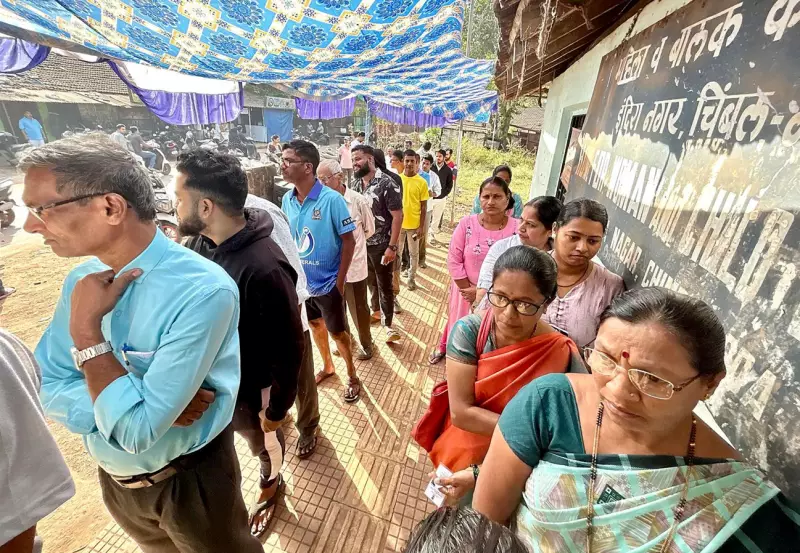
As voters across 50 constituencies in rural Goa cast their ballots on Saturday, a glaring absence defined the high-stakes campaign: the complete sidelining of substantive public issues. Despite a series of local crises shaking public trust, the political discourse was dominated not by debates on governance failures, but by a cold calculus of alliances and seat-sharing arrangements aimed purely at political survival.
A Campaign Trail Devoid of Core Issues
The backdrop to these elections was far from calm. The tragic fire in Arpora, which claimed 25 lives, sent shockwaves through the state. This was compounded by a cash-for-jobs scam that eroded public faith, a persistently rising crime graph featuring thefts, murders, and rapes, and deepening anxiety over land grab cases and illegal conversion scams. These events collectively rattled both the local community and the vital tourism sector.
Yet, as political parties criss-crossed the countryside seeking votes, these pressing concerns barely registered as talking points. Instead of addressing public safety, accountability, and justice, the campaign narrative was hijacked by strategic political maneuvering.

The Political Arithmetic Takes Centre Stage
The focus was squarely on alliance formations and seat adjustments. The ruling Bharatiya Janata Party (BJP) entered into an alliance with the Maharashtrawadi Gomantak Party (MGP), while also cleverly leaving strategic space for supportive independent candidates. The principal opposition, the Congress, partnered with the Goa Forward Party (GFP), with the two parties fielding candidates in 36 and nine seats, respectively.
Other players charted their own courses. The Aam Aadmi Party (AAP) decided to contest alone across 42 constituencies. The Revolutionary Goans (RGP), after a failed attempt to build a grand opposition alliance, attempted to establish its footprint in 30 seats. Political observers unanimously noted that negotiations were driven by the imperative of political survival rather than a contest of ideas or accountability for administrative lapses.
Opposition Failure to Capitalize on Public Anger
This issue-agnostic approach was starkly highlighted by the opposition's, particularly Congress's, failure to channel public grief and anger into a sustained political campaign. Lawyer and political commentator Radharao Gracias pointedly captured this failure in a Facebook post following the Arpora tragedy. He questioned why the Congress was preoccupied with finalizing Zilla Panchayat candidates instead of being on the streets, exposing government failures that led to the disaster.
Observers argue that this missed opportunity created a significant vacuum in Goa's political discourse. When the ruling dispensation should have been under intense pressure, the opposition's inward focus on political positioning meant that a crucial moment to hold power accountable was frittered away. As one poll watcher succinctly put it, while Chief Minister Pramod Sawant's talk of devolving powers to zilla panchayats is welcome, the essential conversation about "safety, accountability, and justice" was conspicuously absent.
The outcome of this election, therefore, may be determined less by a mandate on governance and more by the success of complex seat-sharing equations, leaving the electorate's core concerns unanswered on the campaign trail.