Tirupur Farmers Stage Protest, Demand Concrete Action on Delayed Dam Project
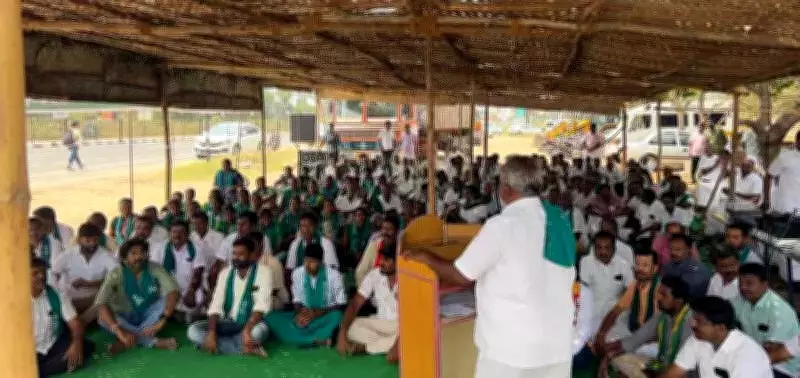
In a significant demonstration of agrarian discontent, a group of farmers staged a protest in Tirupur on Sunday, vociferously demanding a clear timeline and actionable plan for the implementation of the long-pending Anaimalaiyaru–Nallaru dam project. The protesters issued a stark warning, declaring that the votes of Parambikulam–Aliyar Project (PAP) farmers in the upcoming assembly elections would be cast exclusively in favor of political parties that commit to allocating funds and establishing a definitive schedule for the project's execution.
Movement Demands Detailed Execution Plan and Immediate Funding
Members of the Anaimalaiyaru–Nallaru Water Rights Movement organized the demonstration at Pongalur, where they insisted that political parties must release a comprehensive execution plan for the dam project and allocate necessary funds in the very first financial year of the new government. Addressing the gathering, N S P Vetri, the chief coordinator of the movement, provided historical context, noting that the Anaimalaiyaru–Nallaru scheme is one of two projects that were left incomplete out of the eleven dam projects originally envisioned during the tenure of former chief minister Kamaraj.
Vetri emphasized that the project has remained unimplemented for over six decades, prompting the launch of the movement in 2018 to exert pressure for its realization. He highlighted the critical dependency of approximately 4.5 lakh acres of agricultural land in the southern regions of Coimbatore and Tirupur districts on the PAP irrigation system. However, due to persistent and recurring water shortages, only about 2.5 lakh acres currently receive the full benefits of irrigation, severely impacting agricultural productivity and farmer livelihoods.

Potential Benefits and Political Promises Under Scrutiny
The movement coordinator projected that upon completion, the Anaimalaiyaru–Nallaru project could provide an additional 7 to 8 tmc (thousand million cubic feet) of water. This substantial increase would ensure comprehensive irrigation coverage across the entire command area, potentially revitalizing the agricultural sector in the region. Vetri leveled serious allegations against political parties, accusing them of making empty promises during every election cycle without taking any concrete steps towards the project's advancement.
He further claimed that local authorities exerted undue pressure during Sunday's protest, with police denying permission for a proposed hunger strike that was part of the planned agitation. Vetri pointed out that a total of fifteen assembly constituencies fall within the PAP irrigation region, underscoring the significant electoral influence of the farming community. He warned that if their legitimate demands continue to be ignored, farmers would deliver a fitting and decisive reply through their votes in the upcoming elections, potentially reshaping the political landscape in these constituencies.
The protest underscores the deepening frustration among farmers over infrastructural delays and the perceived neglect of agrarian issues by successive governments. The movement's ultimatum places the onus squarely on political parties to translate their electoral rhetoric into tangible action, with the dam project serving as a litmus test for their commitment to rural development and water security.