The results of the recent urban local body elections in Nagpur have underscored a persistent trend in Indian grassroots politics: the enduring power of family networks. The outcomes from the Wadi municipal and Godhani Nagar Panchayat polls, declared on Sunday, revealed how familiar surnames and household connections continue to shape voter preferences and political fortunes.
A Historic Husband-Wife Victory in Wadi
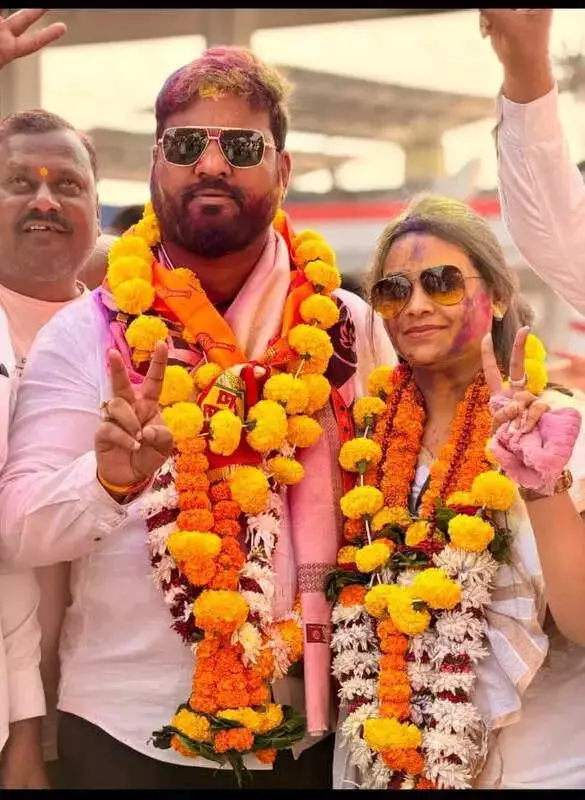
Wadi witnessed a historic moment that has become the talk of local political circles. For the first time in its civic history, a husband and wife were elected simultaneously as corporators, albeit from different wards and under different party banners. Shiv Sena (UBT) candidate Harshal Kakade secured a clear victory from ward 4(A). In a parallel triumph, his wife, Purva Kakade, won from ward 7(B) as an independent candidate, registering a strong personal mandate.
Reflecting on their unique dual victory, Harshal Kakade emphasized the role of their track record. "I did not need to canvass or campaign aggressively because our work over the years was clearly visible to the people. That gave us confidence, as we had the people's support," he said. This instance highlights how individual credibility, built through local work, can triumph even when candidates are not aligned with the same political party.

Congress and BJP Bank on Generational Links in Godhani
In Godhani, the Congress party leaned heavily on its established local faces to consolidate its presence. Veteran leader Arun Raut made a comeback to the political centre stage by winning from ward 9. Strengthening the party's familial strategy, his niece, Kanchan Langade, secured victory from ward 10. This one-two punch underlined the party's reliance on generational connections and name recognition to reinforce its organisational roots in the area, where personal rapport often outweighs pure ideological positioning.
The Bharatiya Janata Party (BJP) mirrored this trend, with family ties playing an equally prominent role in its success. Former sarpanch Deepak Raut and his wife, ex-zilla parishad member Jyoti Raut, won from separate wards (ward 17 and ward 7, respectively). This husband-wife double significantly strengthened the BJP's ward-level arithmetic. The party gained a crucial edge when Roshna Kolte clinched the post of Nagar Panchayat president, tilting the overall balance of power in its favour despite facing close contests in individual wards.
Mixed Fortunes and Voter Sentiment
For the Congress, the outcome was a mixed bag. While Rahul Manohar retained his ward, the party suffered a setback for the top post as his wife, Rupali, lost the presidential race to Roshna Kolte. The contrasting results within the same family highlighted the competitive and unpredictable nature of these local contests, where fine margins often decide leadership positions.
Political observers noted a key takeaway from these elections: the electorate demonstrated a clear ability to separate party identity from individual credibility. Voters appeared comfortable rewarding candidates based on local visibility, accessibility, and personal trust, factors that frequently trumped strict party loyalty. This trend suggests that in the hyper-local arena of municipal and panchayat politics, the candidate's personal connection with the community remains the ultimate currency.