Internal Matter Turns Public: Fadnavis and Sharad Pawar Clash Over NCP Merger
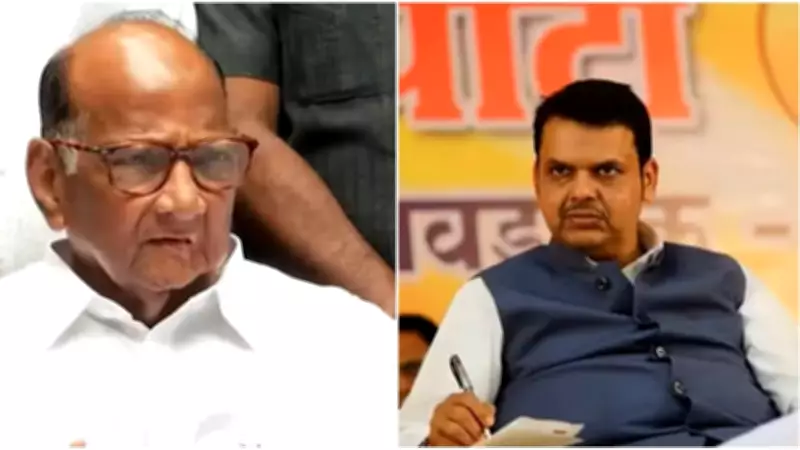
What began as speculation about a possible reunion between the two factions of the Nationalist Congress Party (NCP) has rapidly escalated into a full-blown political confrontation, pitting Maharashtra Chief Minister Devendra Fadnavis against veteran politician Sharad Pawar. The death of former Deputy Chief Minister Ajit Pawar has thrown succession politics into turmoil, with mistrust between NCP factions creating deep uncertainty about any potential merger.
From Dismissal to Direct Confrontation
A day after Chief Minister Fadnavis publicly dismissed theories about an NCP merger, Sharad Pawar responded with a strongly worded retort that has brought the simmering tensions into the open. "How will you know about the merger when you were not even a part of the discussions?" the NCP (SP) chief challenged, marking a significant departure from Fadnavis's previous position that the matter was purely internal to the NCP factions.
This exchange represents a dramatic shift in the political discourse, transforming what was once considered an internal party matter into a public battle between two of Maharashtra's most powerful political figures.

BJP's Strategic Signaling and Succession Politics
Fadnavis's intervention in the merger debate is being interpreted as a calculated strategic move by the Bharatiya Janata Party (BJP). The timing coincides with the BJP's strong defense of its ally NCP's decision to install Ajit Pawar's wife, Sunetra Pawar, as Maharashtra's first woman Deputy Chief Minister shortly after her husband's death.
Sources within the BJP reveal that Fadnavis's statement serves multiple purposes:
- Reasserting BJP dominance within the ruling Mahayuti alliance
- Sending a message about the party's unforgiving stance under national leadership
- Addressing historical grievances from the 2019 political maneuvering
One BJP source explained the underlying motivation: "Under the leadership of Prime Minister Narendra Modi and Union Home Minister Amit Shah, there is no forgiveness. Fadnavis's message indicates a tit-for-tat approach. The party had decided to avenge its embarrassment." This reference points to the short-lived government formed after the 2019 Assembly elections, which eventually forced the BJP into opposition despite being the single largest party.
Deepening Mistrust and Political Calculations
The merger issue has been a constant undercurrent in Maharashtra politics since Ajit Pawar crossed over to the NDA in 2023. While leaders from both NCP camps had previously suggested that "the estranged Pawars would reunite sooner rather than later," Ajit's sudden demise has completely derailed these discussions.
Instead of reconciliation, leaders from both factions are now hurling allegations at each other. NCP (SP) state chief Jayant Patil has accused NCP leaders Praful Patel and Sunil Tatkare of "being in a hurry to take control of the party even before the mourning period ended." This triggered a sharp response from state minister Chhagan Bhujbal, who defended the swift transition of power to Sunetra Pawar.
The BJP's long-term strategy appears to favor keeping the NCP divided. A senior BJP leader questioned: "Why would the BJP empower its allies, especially when the NCP and NCP (SP) no longer trust each other? A divided regional party suits the BJP's plans. Why would we give them a fresh lease of life?" This aligns with Union Home Minister Amit Shah's call for "shat pratishat BJP" (100% BJP) and plans for the party to come to power independently in Maharashtra by 2029.
Uncertain Future and Political Fallout
The public spat between Fadnavis and Sharad Pawar has exposed the deep fractures within Maharashtra's political landscape. State BJP chief Ravindra Chavan maintains that the party has "not coerced anyone to join," while NCP leader Sunil Tatkare denies any knowledge of merger talks, stating that the decision to join the NDA was collective and based on the people's mandate.

What began as succession politics following Ajit Pawar's death has evolved into a complex political battle involving strategic positioning, historical grievances, and fundamental questions about alliance dynamics. The transformation of the NCP merger issue from an internal matter to a public confrontation between Fadnavis and Sharad Pawar signals a new phase in Maharashtra politics, with implications that extend far beyond the immediate question of party reunification.
As claims and counterclaims continue to dominate political discourse, the uncertainty surrounding the NCP's future and Maharashtra's political stability deepens, with both the ruling alliance and opposition forces recalibrating their strategies in response to this escalating conflict.