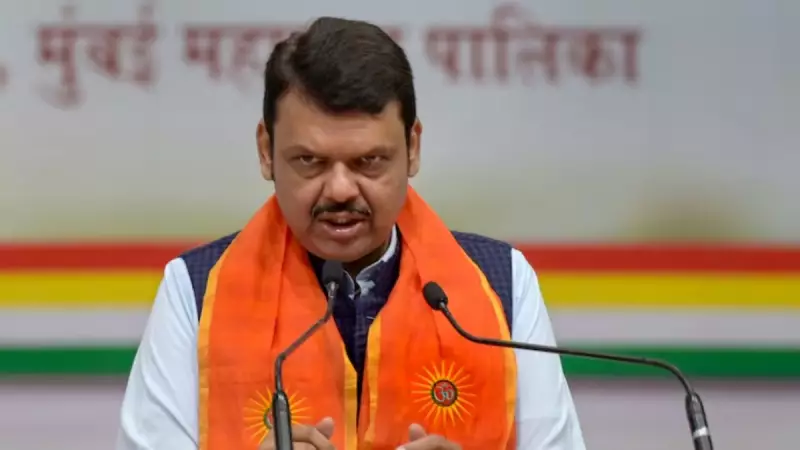
In a dramatic turn of events that has sent shockwaves through Maharashtra's political landscape, Deputy Chief Minister Devendra Fadnavis has publicly denounced an electoral alliance between the Bharatiya Janata Party (BJP) and the Indian National Congress at the local body level. The controversial partnership was formed for the Ambernath Municipal Council elections in the Thane district.
A Surprising Political Partnership
The controversy centers on the Ambernath Municipal Council, where local units of the BJP and Congress decided to join hands to contest the upcoming elections. This unexpected coalition at the grassroots level stands in stark contrast to the fierce rivalry between the two national parties on the state and central stages. The alliance was reportedly forged to create a strong front against other local political players.
However, this move did not sit well with the state's top BJP leadership. Deputy CM Devendra Fadnavis, who is also a senior BJP leader, swiftly and unequivocally distanced himself and the party's state leadership from the decision. He made it clear that such a partnership was not in line with the party's principles or its longstanding political stance against the Congress.

Fadnavis's Strong Condemnation
Devendra Fadnavis did not mince words while expressing his disapproval. He labeled the alliance as "completely unacceptable" to the BJP's state leadership. He emphasized that the party's ideological opposition to the Congress is a core tenet and cannot be compromised for short-term electoral gains at the local level.
"The state leadership of the BJP was not consulted, and we do not endorse this move," Fadnavis stated, clarifying the party's official position. His statement aims to control the political narrative and reassure the party's core supporters who might be confused or angered by seeing BJP workers collaborating with their traditional adversaries.
Political Repercussions and Internal Tensions
This incident has exposed potential fissures between the central command of the BJP and its local units, which often operate with a degree of autonomy in municipal politics. Local alliances are sometimes crafted based on immediate, pragmatic needs to secure a majority in civic bodies, even if they contradict national party lines.
The public rebuke from a leader of Fadnavis's stature puts the local BJP unit in Ambernath in a difficult position. They now face the challenge of either dissolving the alliance, which could weaken their electoral prospects, or defying the clear directive from the state leadership, which could lead to disciplinary action.
Furthermore, the Congress party's state leadership is also likely to face questions from its workers about the rationale behind cooperating with the BJP, a party it consistently criticizes on all other platforms. The episode highlights the complex and often contradictory nature of coalition politics in India's multi-tiered democracy, where local expediency can clash with national ideology.
The fallout from this controversy is expected to influence campaigning for the Ambernath Municipal Council elections and may lead to a reevaluation of how much freedom local units have in forming tactical alliances. It underscores the ongoing tension between ideological purity and pragmatic politics within India's major political parties.