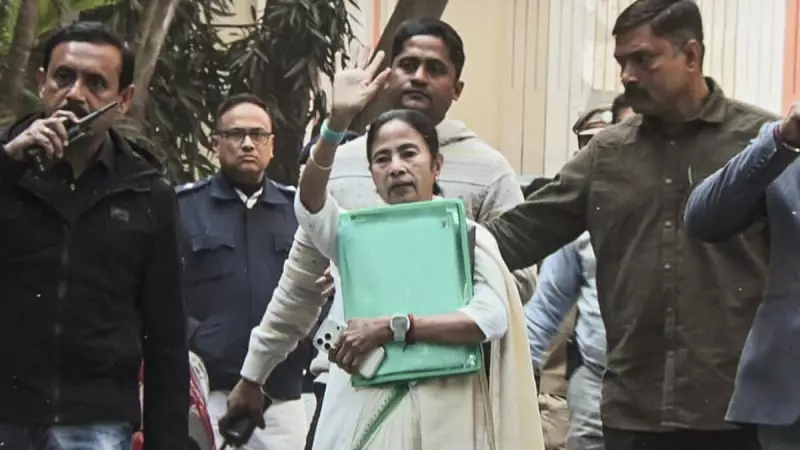
A dramatic confrontation between West Bengal Chief Minister Mamata Banerjee and central investigative agencies has erupted into a significant political crisis, raising profound questions that touch upon India's political norms, legal frameworks, and constitutional principles.
The Core of the Confrontation
The incident, which unfolded recently, centers on actions taken by the Enforcement Directorate (ED) against the Trinamool Congress leadership in West Bengal. Chief Minister Mamata Banerjee has positioned herself in direct opposition to the agency's operations, alleging political motivation behind the probes. This standoff is not merely a war of words; it represents a tangible escalation in the ongoing tussle between the state government led by the Trinamool Congress and the central administration.
Multifaceted Implications of the Drama
The clash immediately brings several critical issues to the forefront. On the political front, it intensifies the already heated rivalry between the ruling party at the Centre and a powerful regional force, setting the stage for broader electoral and governance battles. Legally, the situation tests the boundaries of central agencies' jurisdiction and their interaction with elected state authorities. Most importantly, it invokes constitutional questions concerning the delicate balance of power and the spirit of cooperative federalism enshrined in the Indian Constitution.

The timing of this event, noted as 11 January 2026, adds another layer of significance, potentially influencing political strategies and public perception in the run-up to future electoral contests. The involvement of a figure as prominent as Mamata Banerjee ensures that the episode commands national attention and debate.
Broader Ramifications and the Road Ahead
This episode is likely to have lasting consequences. It could influence how central investigative agencies approach cases involving sitting chief ministers and high-profile opposition leaders. Furthermore, it may prompt judicial scrutiny to define clearer protocols. The political fallout will undoubtedly resonate beyond West Bengal, affecting opposition unity and the central government's narrative against its rivals.
In essence, the ED-Mamata Banerjee clash is more than a fleeting news headline. It is a symptom of deeper institutional tensions within India's democratic polity. The resolution of this drama, whether through political negotiation, legal intervention, or public mandate, will set a crucial precedent for the future of federal relations and political accountability in the country.