Former West Bengal BJP president Dilip Ghosh has adopted a stance of public silence following clear instructions from the party's top leadership in Delhi. This development comes after Ghosh's recent candid remarks criticizing certain party figures and questioning political strategies in the wake of the Lok Sabha election results.
Delhi's Directive and Ghosh's Response
According to sources within the Bharatiya Janata Party, the central leadership has explicitly asked Ghosh to refrain from making frank public statements for the time being. This directive was issued after a press conference he held on Thursday. In response, Ghosh has chosen to maintain a low public profile, focusing on ground-level interactions instead of media engagements.
Campaigning in Preferred Constituency
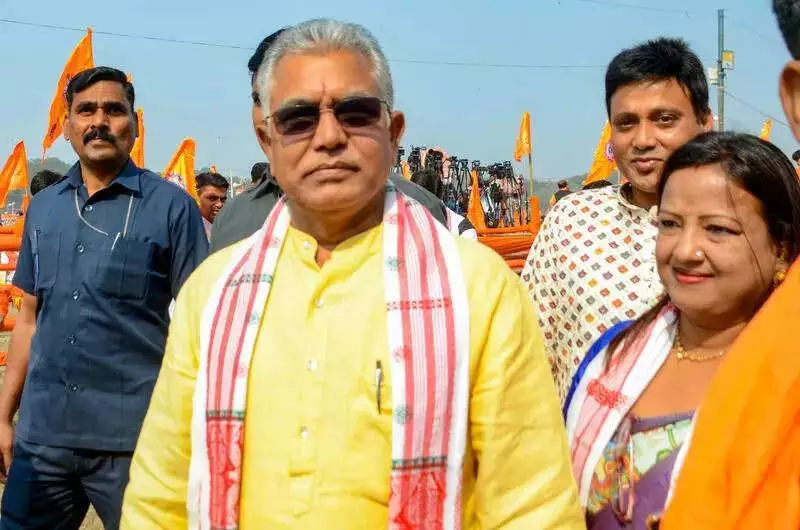
On Saturday, Ghosh was seen campaigning in Kharagpur, the constituency he is known to favor. His activities included a visit to a local temple where he offered prayers. Notably, he deliberately avoided speaking to the media persons present at the location, adhering to the party's advice.
The following day, on Sunday, the former state chief was observed during his routine morning walk. He engaged in informal chit-chat with local residents, sharing tea with them. When questioned about this, Ghosh downplayed the significance, stating, "I am present at chitchats over tea every day. This is nothing new. The locals also started joining in. The change is perceptible." His comments suggested a shift towards more organic, grassroots connection.
Constituency Dynamics and Internal Voices
The possibility of Ghosh contesting from Kharagpur has stirred local political dynamics. However, Hiraan Chattopadhyay, the current MLA from Kharagpur, has voiced strong opposition to the idea of being removed to accommodate Ghosh. Chattopadhyay stated it would be "unjust" to displace him from the constituency, indicating potential internal discussions or tensions regarding candidate placement for future elections.
This episode highlights the BJP's efforts to manage internal discourse and present a united front, especially after its performance in the Faizabad constituency during the Lok Sabha polls, which had prompted Ghosh's original critique of "mandir-masjid politics." The party's intervention underscores the sensitivity surrounding public commentary from senior leaders in the post-election phase.