The political landscape in West Bengal witnessed significant developments during Union Home Minister Amit Shah's recent visit to Kolkata. The re-emergence of former state BJP president Dilip Ghosh in crucial party meetings brought a sense of relief to veteran party members. However, the conspicuous absence of key leaders from the influential Matua and Rajbangshi communities underscored underlying tensions within the party's ranks as it gears up for the pivotal 2026 state assembly elections.
Ghosh's Strategic Comeback and Meeting with Shah
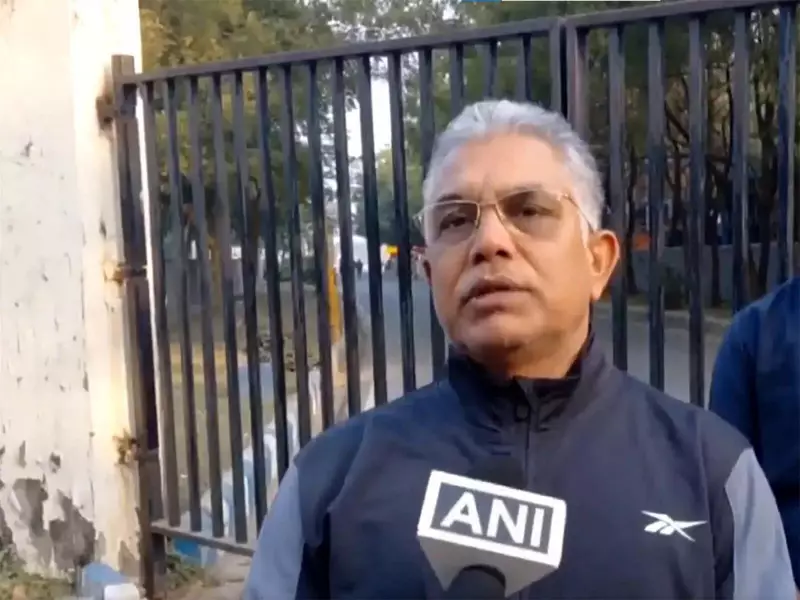
Dilip Ghosh was spotted entering a New Town hotel where Amit Shah was staying. He participated in a closed-door meeting that included state BJP president Samik Bhattacharya, Leader of the Opposition Suvendu Adhikari, and Union Minister of State Sukanta Majumdar. This marked a notable return to the inner circle for Ghosh after a period of relative political distance.
When approached by journalists, Ghosh declined to elaborate on the specifics of the discussions but signaled his readiness to take on a significant responsibility. "I came to listen to Amit-ji. I will see what role the party decides," he stated, indicating his willingness to comply with the party's command. Insiders suggest that Ghosh is likely to be entrusted with a major campaign role following this meeting and his recent interaction with Chief Minister Mamata Banerjee in Digha.

Notable Absences Point to Community Discontent
While Ghosh's presence was a talking point, the absence of several prominent figures from Wednesday's BJP meeting drew considerable attention and sparked speculation. Gaighata MLA Subrata Thakur, Haringhata MLA Asim Sarkar, and Rajya Sabha member Ananta Maharaj were notably missing from the gathering.
These leaders represent the Matua and Rajbangshi communities, which are crucial voter bases for the BJP in Bengal. Their absence is interpreted by political observers as a sign of unease and possibly unresolved issues within the party's coalition framework. This development highlights a critical challenge for the BJP as it attempts to consolidate its position and craft a unified strategy to take on the ruling Trinamool Congress in 2026.
Implications for the 2026 Electoral Battle
The twin narratives of Ghosh's reintegration and the allies' absence paint a complex picture for the Bengal BJP. On one hand, the party seems to be mending fences with a seasoned and influential leader like Ghosh, potentially leveraging his organizational strength. On the other hand, the apparent discontent among leaders of key social groups could threaten the party's carefully built social coalition.
The 2026 assembly polls are already casting a long shadow over Bengal's politics. Amit Shah's visit and the subsequent meetings were clearly aimed at streamlining the party's machinery and addressing internal fissures. The success of the BJP's mission in Bengal will heavily depend on its ability to present a united front, balancing the aspirations of its veteran leaders with the expectations of its core support communities like the Matuas and Rajbangshis.