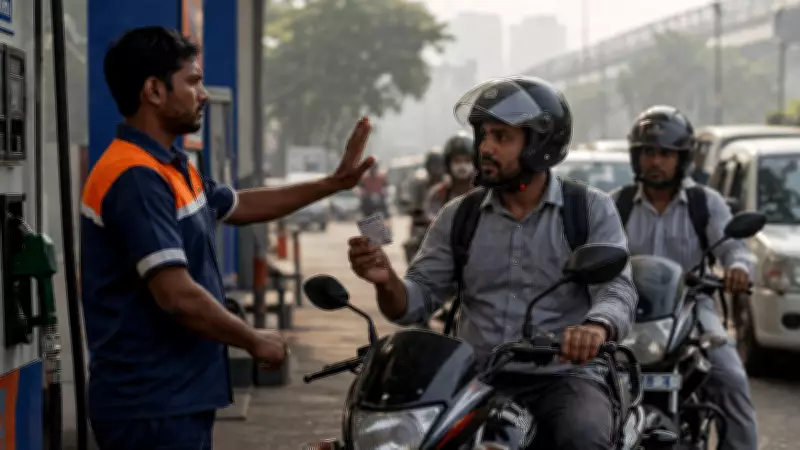
The Delhi government has intensified the enforcement of the 'No Pollution Under Control (PUC), No Fuel' rule, resulting in more than 15,000 vehicles being denied fuel across the national capital in just four days. Data released by the transport department on Thursday revealed that between April 27 and April 30, 2026, a total of 15,234 vehicles were refused petrol or diesel at fuel stations for failing to produce a valid PUC certificate.
Background of the Rule
The provision was first introduced in October 2025 as part of the city's efforts to combat air pollution. However, Chief Minister Rekha Gupta called for stricter implementation in April 2026, following concerns that the rule was not being enforced uniformly. The directive aimed at ensuring that all vehicles plying on Delhi roads comply with emission norms.
Enforcement Measures
Under the tightened norms, fuel station operators are required to check the PUC certificate of every vehicle before dispensing fuel. Those found violating the rule face penalties, including suspension of their license. The transport department has deployed teams to conduct surprise inspections at fuel stations across the city. In the past four days, 12 fuel stations were issued warnings for non-compliance.

- Over 15,000 vehicles denied fuel in four days
- 12 fuel stations warned for violating the rule
- Surprise inspections conducted across Delhi
Impact on Vehicle Owners
Vehicle owners are now rushing to get their PUC certificates renewed. The transport department has extended the operating hours of PUC testing centers to accommodate the surge. Officials said that the number of PUC tests conducted daily has increased by 40% since the stricter enforcement began.
“We welcome the government's move as it will help in reducing vehicular pollution. However, there is a need for more testing centers to avoid long queues,” said Ravi Sharma, a resident of Dwarka.
Data and Statistics
According to the transport department, of the 15,234 vehicles denied fuel, two-wheelers accounted for 8,456, cars for 5,678, and commercial vehicles for 1,100. The maximum number of violations were reported in east and south Delhi districts.
- Two-wheelers: 8,456
- Cars: 5,678
- Commercial vehicles: 1,100
Government's Stance
Chief Minister Rekha Gupta stated that the strict enforcement is necessary to improve air quality in the city. “Delhi's air pollution is a serious concern, and we are committed to taking all necessary steps. The 'no PUC, no fuel' rule is a crucial measure to ensure that vehicles are not contributing to the problem,” she said.
The government has also launched a mobile app that allows vehicle owners to locate nearby PUC testing centers and check their certificate validity. The app has been downloaded over 50,000 times since its launch last week.
Challenges and Future Plans
While the enforcement has been effective, some challenges remain. Fuel station owners have complained about the additional burden of checking certificates, leading to longer waiting times. The government is considering introducing automated systems to streamline the process.
In the coming weeks, the transport department plans to deploy more enforcement teams and increase the number of surprise inspections. The rule is also expected to be extended to cover vehicles entering Delhi from neighboring states.