CPM Leads Jan Akrosh Rally in Mandi, Condemning Central Government's Policies
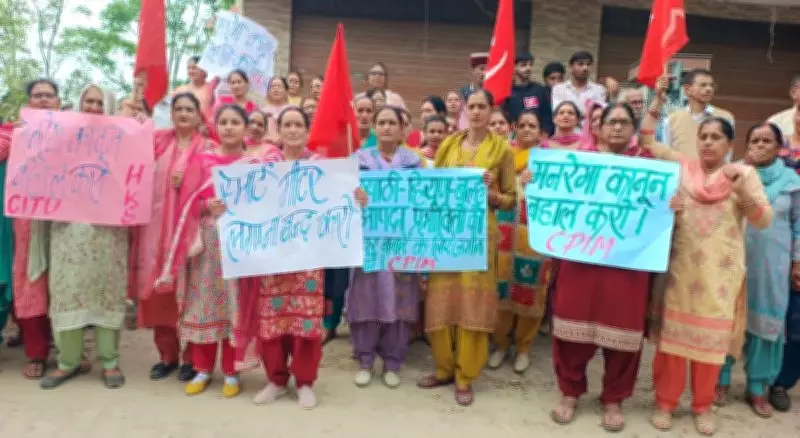
In a significant demonstration of dissent, the Communist Party of India (Marxist) orchestrated a state-level Jan Akrosh Jatha that culminated in Bharari-Sajao Piplu, located in the Dharampur area of Mandi district, on Saturday. The event saw a robust gathering of party leaders, dedicated workers, and local residents who united to voice their opposition against what they described as the "anti-people policies" implemented by the Central Government.
Protest Activities and Public Engagement
The programme was a multifaceted affair designed to resonate with the masses. It featured a spirited rally, an engaging public meeting, thought-provoking street plays, and resonant songs that collectively highlighted the pressing issues confronting workers, farmers, and rural communities across the region. Beyond the immediate protest, party leaders passionately urged attendees to mobilize for a national rally scheduled to take place on March 24 at Ramlila Maidan in New Delhi, emphasizing the importance of a unified front against governmental actions.
Prior to the arrival of the state-level delegation, local activists had already set the tone by organizing a preliminary rally at Bharari. During this gathering, participants raised powerful slogans against government policies and expressed strong opposition to the installation of smart electricity meters, setting the stage for the broader protest.
Key Allegations and Criticisms from CPM Leaders
During the public meeting, several prominent CPM leaders articulated specific grievances against the Central Government's initiatives:
- Rakesh Singha, a former MLA, leveled serious allegations, accusing the Central Government of advancing towards the privatization of public sector institutions and transferring control to large corporate entities. He contended that the installation of smart electricity meters is a strategic component of a broader plan to privatize the electricity sector. Additionally, Singha highlighted the discontinuation of the Revenue Deficit Grant (RDG) to Himachal Pradesh, warning that this move could severely impact welfare schemes and essential public services in the state.
- Vikram Singh, another CPM leader, directed criticism towards the reported restructuring of the Mahatma Gandhi National Rural Employment Guarantee Act (MGNREGA). He alleged that the Central Government intends to reduce its funding share and restrict employment opportunities under this crucial scheme, thereby undermining rural livelihoods.
- Sanjay Chauhan, a state leader, raised concerns over the entry of foreign companies into the agricultural sector and recent amendments to the Forest Conservation Act of 1980. He also advocated for land allocation to disaster-affected and landless families in Himachal Pradesh, stressing the need for equitable resource distribution.
The protest underscored a growing discontent among various segments of society, with the CPM positioning itself as a vocal advocate for the rights of workers, farmers, and marginalized communities. The call for participation in the upcoming national rally in Delhi reflects a strategic effort to amplify these concerns on a larger platform, aiming to galvanize broader public support against perceived governmental overreach and policy missteps.