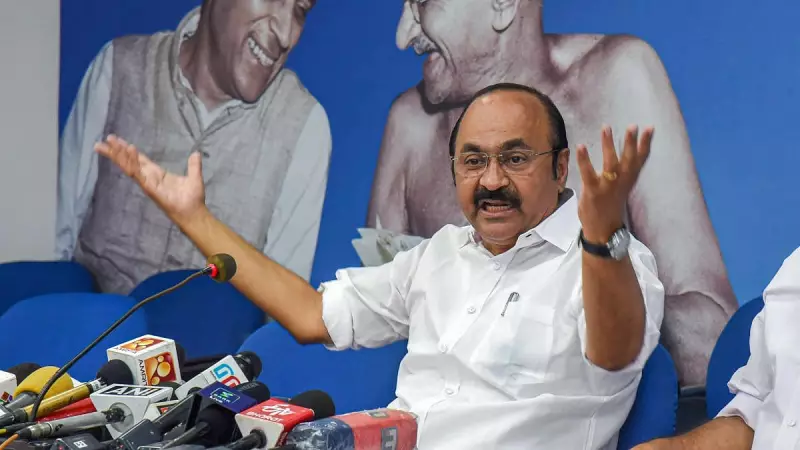
In a significant move aimed at revitalizing its cadre and appeal, the Congress party in Kerala has announced a major reservation policy for the upcoming Assembly elections. The party's state leadership, led by Leader of the Opposition V.D. Satheesan, declared that up to half of the party's seats will be allotted to women and younger candidates.
A Strategic Push for Inclusivity and Dynamism
V.D. Satheesan made this pivotal announcement on 28 December 2025, outlining a clear directive from the party's national leadership. The core objective is to infuse fresh energy and ensure a more dynamic and active political presence. By earmarking a substantial portion of tickets for women and youth, the Congress aims to address long-standing calls for greater representation and to connect with a broader demographic of voters in the state.
Satheesan emphasized that the national leadership is particularly keen on this transformation. The focus is squarely on bringing in younger faces to keep the party's machinery agile and responsive to contemporary political challenges. This decision marks a deliberate shift in candidate selection strategy, moving beyond traditional considerations.

Breaking Down the 50% Quota
While the exact distribution between women and youth within this reserved quota is to be finalized, the announcement of a up to 50% reservation is itself a landmark in Kerala's political landscape. The move is expected to open doors for a new generation of leaders and significantly increase the number of women contesting on the Congress ticket.
This policy directly responds to internal and external critiques about the aging profile of candidates and the under-representation of women in electoral politics. By institutionalizing this quota, the Congress hopes to project a forward-looking and inclusive image ahead of the crucial state polls.
Implications for Kerala's Political Arena
The announcement is poised to have far-reaching consequences. Firstly, it sets a new benchmark for other political parties in Kerala regarding candidate diversity. It may force rivals to re-evaluate their own lists and make similar commitments to avoid being perceived as outdated.
Secondly, it could lead to intense internal negotiations within the Congress, as established leaders may need to make way for new entrants. Managing these expectations will be a key test for the party's unity. Finally, for the electorate, this signals a potential change in the nature of political discourse, with issues pertinent to youth and women likely gaining greater prominence in the campaign narrative.
As the Kerala Assembly polls draw nearer, the implementation of this 50% seat allotment promise will be closely watched. It represents a bold gamble by the Congress to rejuvenate its base and challenge the incumbent LDF government with a renewed and representative team.