Congress Stages Protest in Assam Over Alleged Voter List Manipulation
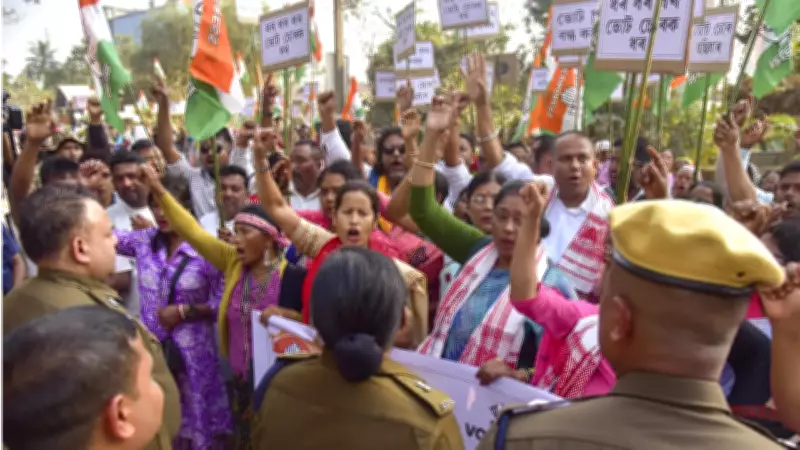
In a significant political development, the Opposition Congress party organized a protest demonstration in Assam's Kamrup district on Wednesday. The protest was specifically held in front of the office of the Boko–Chaygaon Sub-Divisional Commissioner, targeting what the party termed as systematic "vote theft" through the ongoing Special Revision (SR) process of electoral rolls.
Allegations of Night-Time Interference
The Congress party leveled serious accusations against BJP workers, alleging they entered the election office at night to interfere with the deletion and inclusion of names in the voters' list. This alleged interference forms the core of what Congress describes as a deliberate attempt to manipulate the electoral process in favor of the ruling party.
Congress MLA's Strong Criticism
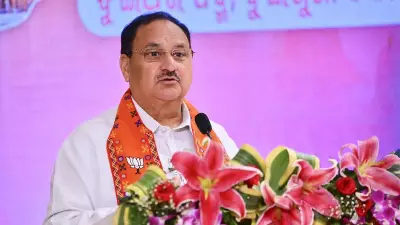
Addressing the gathering of protesters, Congress MLA Rakibuddin Ahmed launched a scathing attack on the state government's approach. "The entire Special Revision process is nothing but a well-planned tactic to steal the opposition's votes," Ahmed declared. He further alleged that "the Election Commission is actively helping the BJP in this dubious game."

The MLA reserved his harshest criticism for Chief Minister Himanta Biswa Sarma's recent public statements. "For the past two to three days, our Chief Minister has been repeatedly making statements at public meetings that Miyas should be punished," Ahmed stated, adding that "it is truly unfortunate and unacceptable that a chief minister would target one particular community in this manner."
Historical Context and Community Identity
The term 'Miya' carries complex historical connotations in Assam. Originally used as a pejorative term for Bengali-speaking Muslims in the state, it has been adopted by community activists in recent years as a gesture of defiance and identity reclamation. Non-Bengali speaking Assamese people often identify this community as Bangladeshi immigrants, though many families have lived in Assam for generations.
Ahmed emphasized this historical connection, stating: "These people are deeply connected with Assam's land, culture, dignity and unity. They have been living here for hundreds of years." He accused the BJP of "attempting to create dangerous divisions in Assamese society" through what he called the CM's reprehensible calls to harass a particular community and delete their votes.
CM's Counter-Statement and BJP's Position
Meanwhile, Chief Minister Himanta Biswa Sarma presented a different perspective during his Wednesday address. Stating that "Bangladeshi Miyas" live in Assam, Sarma revealed that BJP workers have filed more than five lakh complaints during the SR process against what they identify as "foreigners" on the electoral rolls.
Electoral Roll Statistics and Process
The integrated draft electoral rolls for Assam, published on December 30 after the Special Revision, show significant changes:
- Total electors: 2,52,01,624 (1.35% increase from January 2025)
- Additions from January 6 to December 27: 7,86,841
- Deletions during same period: 4,47,196
- Identified deceased electors: 4,78,992
- Identified shifted electors: 5,23,680
- Multiple entries identified: 53,619
The Election Commission clarified that these identified names have not yet been deleted from the rolls. They will only be processed for removal or shifting after formal applications are received during the current claims and objections period. The final electoral rolls are scheduled for publication on February 10.
Congress Demands Action
Following their protest demonstration, Congress leaders and workers met with election authorities to formally demand strict action against the alleged irregularities. They presented their concerns about the SR process and requested immediate intervention to ensure free and fair electoral procedures.
The protest highlights growing political tensions in Assam as the state prepares for upcoming Assembly elections, with both major parties presenting starkly different narratives about the electoral revision process and its implications for democratic representation.