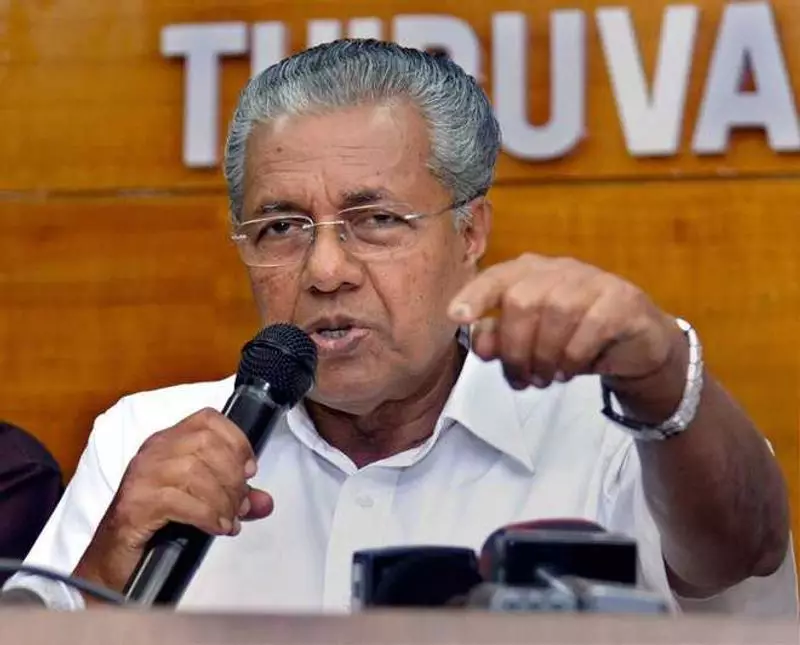
A Congress party functionary in Kerala has been taken into police custody for his alleged involvement in creating and disseminating a fabricated image that used artificial intelligence to link Chief Minister Pinarayi Vijayan with a key accused in the high-profile Sabarimala gold smuggling case. The arrest underscores the escalating concerns over the malicious use of AI technology to spread disinformation for political gains.
The Arrest and Allegations
The accused, identified as Shiju Khan, serves as the general secretary of the Congress party's Kannur district unit. According to the Kerala Police's Cybercrime wing, Khan was apprehended from his residence in Kannur on Monday. The case against him was registered under several sections of the Indian Penal Code, including those related to forgery, cheating, and criminal conspiracy, along with relevant provisions of the Information Technology Act.
The central piece of evidence is a digitally altered photograph. The original image is a widely circulated picture of Chief Minister Pinarayi Vijayan. Using AI-powered editing tools, the accused allegedly superimposed the face of Swapna Suresh, the prime accused in the sensational Sabarimala gold smuggling scandal, next to the CM. This manipulated visual was then shared across various social media platforms with captions intended to suggest a clandestine and improper association between the two individuals.

Context: The Sabarimala Gold Smuggling Case
To understand the gravity of the allegation, one must recall the Sabarimala case that shook Kerala's political landscape. The scandal involved the smuggling of large quantities of gold through the diplomatic channel of the United Arab Emirates (UAE) Consulate in Thiruvananthapuram. Swapna Suresh, a former employee of the Consulate, is a central figure in the investigation being conducted by multiple agencies, including the Enforcement Directorate (ED) and the Customs Department. The case had significant political ramifications, with the opposition, including the Congress, targeting the ruling Left Democratic Front (LDF) government over the alleged involvement of individuals with links to the administration.
The creation of an AI image placing the CM with Swapna Suresh is seen as a direct attempt to reignite this controversy and damage the Chief Minister's reputation by visually fabricating a connection that implies collusion or familiarity.
Police Investigation and Political Repercussions
The Cybercrime police initiated a probe after the fabricated image went viral on social media, causing a stir. Their technical investigation reportedly traced the origin and dissemination trail back to Shiju Khan. The police have stated that they seized electronic devices from the accused for forensic examination to gather further evidence.
The arrest has triggered a political slugfest. Leaders from the ruling CPI(M) have condemned the act, labeling it as a desperate and unethical attempt at character assassination by the Congress. They have demanded strict action against all involved in creating and spreading such malicious content.
On the other hand, the Congress party has offered a cautious initial response. While some local leaders have distanced themselves from Khan's alleged actions, emphasizing that individuals are responsible for their own conduct, others have questioned the timing and intent behind the arrest, suggesting it is a politically motivated move to suppress criticism.
The Larger Issue of AI Misuse in Politics
This incident is not an isolated one but part of a dangerous global and national trend where deepfake technology and AI image generators are weaponized for political propaganda. These tools can create highly convincing yet entirely false visuals and audio clips, posing a severe threat to the integrity of public discourse, electoral processes, and social harmony.
Legal experts point out that while existing laws like the IT Act cover aspects of forgery and defamation, the rapid advancement of AI-generated content calls for more specific and stringent regulations. The case in Kerala serves as a stark reminder for law enforcement agencies to enhance their digital forensics capabilities to detect and trace such sophisticated manipulations.

The arrest of a political worker for sharing an AI-generated image marks a significant moment in India's ongoing struggle against digital misinformation. It highlights the urgent need for public awareness about deepfakes, responsible behavior from political parties, and a robust legal framework to deter those who seek to poison the well of democratic debate with fabricated reality.