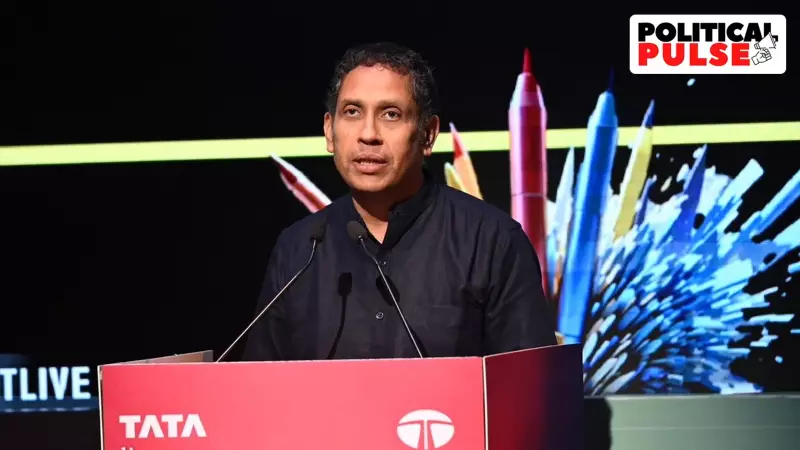
The political landscape in Tamil Nadu has been jolted by sharp comments from a senior Congress data analyst, exposing underlying tensions within the INDIA alliance just months before the state heads to the polls. Praveen Chakravarty, Chairman of the All India Congress Committee's (AICC) professional wing and head of its data analytics department, has triggered a major controversy by labeling the debt situation in the DMK-ruled state as "alarming."
Debt Data vs. Political Diplomacy
In an exclusive interview, Chakravarty defended his January 2026 remarks, which were based on an RBI report on state finances. He stated his analysis covered a 15-year trend from 2010 to 2025 and was not a targeted critique of the current DMK government, which has been in power for four years. "Was there anything factually wrong in what I said?" he questioned, emphasizing his track record of commenting on the fiscal health of various states like Bihar, Karnataka, and Maharashtra irrespective of election cycles.
The data he highlighted showed Tamil Nadu's debt-to-GDP ratio rising to 30% in 2025, significantly higher than Karnataka's 22%. He also pointed out that the state's interest burden is the third highest in the country, after Punjab and Haryana. "The one positive of all this noise about my post is that the average youth in Tamil Nadu is now aware of the issue of debt," Chakravarty remarked, noting that youngsters in Chennai had approached him with questions about interest payments.

A Clash of Cultures Within the Alliance
The reaction to his comments has been fierce, particularly from the DMK and a section of Tamil Nadu Congress leaders. Chakravarty framed the backlash as a clash of political cultures. He praised the liberal values within the Congress, fostered by Rahul Gandhi's leadership, which allows for internal dissent on issues like the Old Pension Scheme or welfare spending. "It is actually quite laughable that some of our Tamil Nadu allies said that I should be expelled for pointing out debt levels from an RBI report. This shows how intolerant some of these parties are," he stated.
He took a direct jab at state Congress leaders who criticized him, suggesting their outrage revealed their dependency on the DMK. "So it just exposes how some of these TN Congress leaders are so heavily dependent on DMK for their very political existence," he asserted, contrasting their reaction with the silence from the party's central leadership in Delhi.
The Core Demand: Seats, Power, and Respect
Moving beyond the debt controversy, Chakravarty articulated the growing restlessness within the Congress cadre in Tamil Nadu. He revealed that more than 75% of the party workers are demanding a greater share of alliance seats, a stake in power, and more respect from their senior partner. "The Congress cadre's demand now is that we have waited for far too long, 60 years, it is now time for us to ask for this," he said.
He challenged the notion that the Congress is merely a fringe player, arguing that its vote share is crucial for the alliance's success. "You remove the Congress's vote share and let us see whether the alliance can come to power?" he asked, emphasizing that a significant section of anti-BJP voters in the state trust only the Congress and will follow its lead.
Addressing speculation about a potential realignment, Chakravarty confirmed a meeting with Tamilaga Vettri Kazhagam (TVK) chief Vijay but declined to divulge details. He framed the cadre's position clearly: "All we are saying is the Congress cadre's demand is that whichever party is willing to accommodate these demands is who our natural partner should be." When asked if the party should go solo if demands are unmet, he stated that such strategic decisions rest with the Congress high command.

The interview concludes with Chakravarty addressing the criticism for comparing Tamil Nadu's debt to that of BJP-ruled Uttar Pradesh, clarifying it was a technical, not political, comparison. He dismissed as "silly and immature" the allegations of being a 'Sanghi in disguise' for making such an analytical point. As Tamil Nadu gears up for the April 2026 Assembly elections, these remarks have laid bare the complex negotiations and simmering discontent within the opposition bloc.