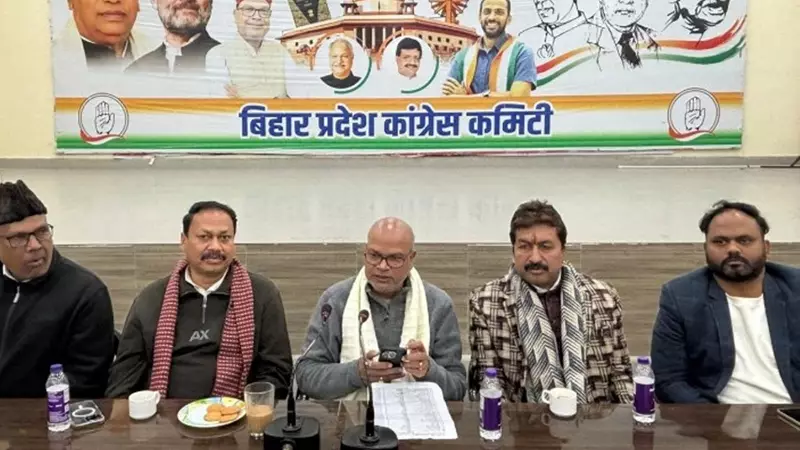
In the aftermath of a severe electoral setback, the Bihar unit of the Congress party is embroiled in significant internal turmoil. The state leadership has initiated a major crackdown, taking disciplinary action against a total of 43 party figures accused of fostering rebellion and engaging in anti-party conduct during the recent Assembly polls.
A Committee Constituted for Action
The decisive move came swiftly after the election results were declared on November 14, 2025, which saw the Congress's tally shrink to a mere six seats in the 243-member Bihar Assembly. Within just two days, on November 16, the state Congress president, Rajesh Kumar, established a state-level disciplinary committee to address the brewing dissent.
This committee, headed by senior leader Kapildev Prasad Yadav, has so far expelled seven prominent leaders and issued show cause notices to 36 others. The actions are based on allegations of "indiscipline and anti-party activities" that purportedly harmed the party's prospects.

The Leaders Facing the Heat
The seven expelled members include former Bihar Congress vice-presidents Rajkumar Rajan and Shakeelur Rahman, along with Banka district party chief Kanchana Singh. Among the 36 others who have received show cause notices are notable names such as former Khagaria MLAs Chhatrapati Yadav and Gajanand Shahi, ex-Bihar minister Veena Shahi, and former Congress MLC Ajay Kumar Singh.
Furthermore, the cases of six leaders have been escalated to the All India Congress Committee's (AICC) Disciplinary Action Committee for a final decision. This list includes former MLA Sudhir Kumar alias Bunty Chaudhary, former Bihar Congress spokesperson Anand Madhab, former Bihar Youth Congress president Nagendra Paswan Vikal, AICC member Madhurendra Kumar Singh, former MLA Chhatrapati Yadav, and former Bihar minister Afaque Alam.
Roots of the Rebellion and Internal Discord
The disciplinary measures stem from what was described as an "open rebellion" against the state party chief, Rajesh Kumar, and the AICC's Bihar in-charge, Krishna Allavaru. During the ticket distribution process, a faction of disgruntled leaders had publicly accused the leadership of "taking bribes for giving tickets," leading to allegations of favoritism and corruption.
This dissent came to a head on October 18, 2025, when a group of Congress ticket seekers, including spokesperson Anand Madhab and MLA Chhatrapati Yadav, held a press conference in Patna to level these serious charges, causing considerable embarrassment to the party just days before voting commenced.
While some leaders were reportedly pacified after meetings with central observers like Ashok Gehlot and Avinash Pande, the post-poll scenario has seen a uniform application of disciplinary measures. A senior Congress leader, speaking anonymously, suggested that while some action was deserved, targeting all dissenters with the same yardstick was "a bit unfair," especially as many are seasoned party hands.
Those facing action have defended their stance. Chhatrapati Yadav argued, "We didn't speak against the party but spoke against those who were in positions of power and misused their positions." Similarly, Anand Madhab contended that their criticism was intended for the party's benefit and expressed disappointment that promised discussions with the high command never materialized. Madhab also questioned the validity of the state-formed committee, stating that such powers reside solely with the AICC.
Tariq Anwar, a Bihar MP and member secretary of the AICC committee, confirmed that the state unit's request for action is now with Congress president Mallikarjun Kharge for a final decision. Committee head Kapildev Prasad Yadav justified the actions, stating the leaders were penalized for taking internal grievances public and making "false allegations" against the state leadership.

This sweeping purge highlights the deep fissures within the Bihar Congress as it grapples with the twin challenges of a devastating electoral defeat and intense internal factionalism, setting the stage for a potentially protracted period of reconciliation or further conflict.